

A DJ’s best wedding footage may tell you little about how they’ll handle your corporate event. Corporate celebrations have their own rhythm, from networking and formal announcements to a lively dance floor. The questions to ask a corporate event DJ should show how their experience fits your event, not just how polished their performance looks. They can also help you judge whether the DJ’s approach suits your audience and programme.
Look for clear evidence before you choose: reviews, performance videos and examples of similar events can help you understand a DJ’s style. Ask about corporate experience, music preferences and requests, equipment, contingency plans and client feedback. Questions about setup can also help you work out how the entertainment will fit into your event schedule.
Key Takeaways
- Look for examples from corporate events with a similar format and atmosphere, not just polished wedding footage.
- Set expectations for genres, brand guidelines and guest requests so the music suits your event.
- Discuss backup plans for equipment failure or illness to understand how the entertainment can stay on track.
- Use client references, reviews and performance videos to get a clearer picture of the DJ’s style and professionalism.
1. Can I see examples of corporate events you’ve done, not just weddings?
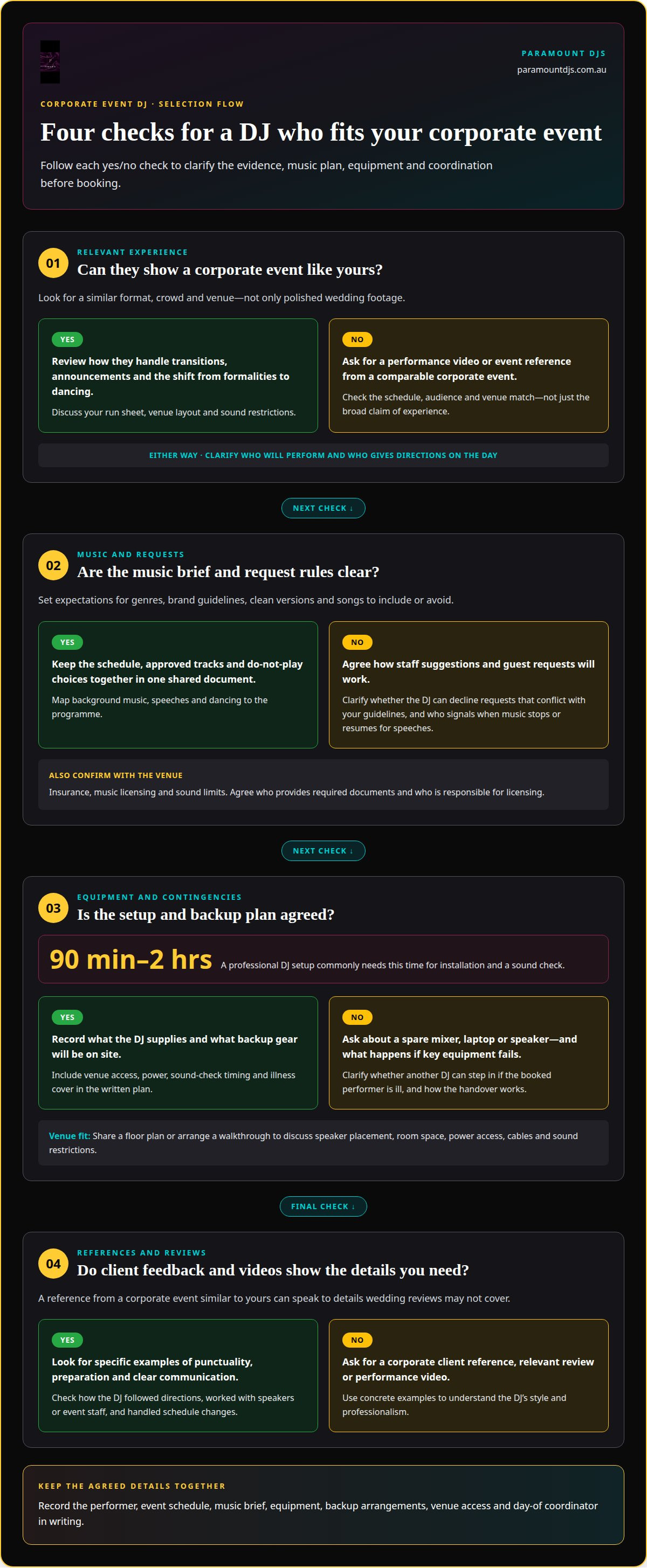
Ask for examples from corporate events with a format like yours. A wedding reception, product launch, awards gala and conference after-party each call for different pacing. Request a performance video or event reference that shows the DJ working with a comparable crowd and programme. Look for evidence of how they handle transitions, announcements and the move from formalities to dancing.
The venue matters, too. A hotel ballroom, warehouse and conference centre can each call for a different approach to sound and room layout. Share your venue type and ask how the layout, sound restrictions and schedule will shape the setup. For example, a networking event followed by speeches and dancing needs music that can shift with the programme.
Clarify who will perform on the night, particularly when booking through a larger company. Ask whether the person you meet during planning will be the DJ at your event, and how communication will work between you, the DJ and your venue contact. If the DJ will also emcee, discuss introductions, speaker announcements and who will cue each formal moment.
Match the entertainment format to your programme. A DJ can move between background tracks and dance-floor selections. A live band performs music live, while a DJ and live performers combine recorded tracks with live music. Consider whether speeches, a compact stage area or a varied music brief makes one option a better fit.
Assess experience through specific examples, not broad claims. Ask how the DJ handled an event with a similar schedule, audience and venue, then discuss your run sheet. Identify who will give directions on the day, such as the event organiser or venue function manager. Agree on setup access, sound-check timing and the changeover from final speeches to the first music track before booking.
2. Music library, genres and song requests
Ask what music the DJ can play and how they’ll shape a playlist for your event. Share your preferred genres, brand guidelines and any songs to include or avoid. For a product launch, that might mean background music during arrivals, followed by upbeat tracks after formalities. If you need clean versions, clarify this in your music brief, especially when clients, staff and executives are attending.
Agree on how requests will work before the event. Staff could submit suggestions in advance, while the DJ follows an approved playlist during the programme. If guests can make requests on the night, clarify whether the DJ can decline songs that conflict with your guidelines. This lets the DJ respond to the crowd while keeping the event’s tone and brand in mind.
Map the music to each part of the schedule. Background selections can support networking, breaks and mealtimes without competing with conversation. For speeches, identify when music should stop, whether walk-on tracks are needed, and who signals the DJ to resume. An experienced DJ uses crowd-reading skills to adjust tempo and energy as the room changes, while keeping your approved genres and volume expectations in view.
Ask the venue about its requirements for insurance, music licensing and sound limits. Agree who will provide any required documents and who is responsible for music licensing. For an office, warehouse, marquee or dry-hire space, put licensing responsibility in writing and confirm the venue’s noise limits before finalising the playlist. These details can affect the music and volume.
Before booking, have the DJ confirm the final music brief, request process and any restrictions in writing. Put the event schedule, approved tracks and do-not-play choices in one shared document. This gives the DJ a clear reference if the programme changes and helps your team keep the music consistent from guest arrival to the finish.
3. Do you provide your own sound and lighting equipment, and is there a backup?
Ask which sound and lighting equipment the DJ supplies, and what the quote includes. Clarify whether the venue provides any equipment, or whether the DJ brings everything needed for playback. A professional DJ setup commonly needs 90 minutes to 2 hours for installation and a sound check. Agree on access time so setup fits the venue schedule.
Room layout and power access affect equipment placement. Share the floor plan or arrange a venue walkthrough to discuss speaker placement, available power and sound restrictions. Ask how much space the setup needs and whether cables or speakers could obstruct guest areas. A compact function room and a large ballroom may need different layouts.
Ask what backup equipment will be on site, such as a spare mixer, laptop or speaker. Find out what happens if a key component fails during the event and who will troubleshoot it. Add the answers to your event checklist. If the DJ becomes ill or cannot attend, ask whether another DJ can step in and how the handover would work.
Booking, deposit, cancellation and overtime terms vary by agreement, so get them in writing before committing. Confirm the cancellation and rescheduling policy, performance period and how overtime is handled. The quote should also clarify whether setup and pack-down time, travel and equipment are included.
Before you confirm, record the arrangements in one written plan: equipment supplied, backup gear, venue access, power needs and illness cover. Name the person who will coordinate with the venue on the day. This gives everyone a shared reference if the room layout or run sheet changes and makes the DJ’s responsibilities clear.
4. Client references, reviews and performance videos
Ask for a reference from a corporate client whose event resembles yours. Someone who planned an awards dinner can speak to details wedding reviews may not cover, such as formal announcements and coordination with the venue team. Ask how the DJ communicated before the event, followed directions on the night and handled schedule changes.
Read reviews for specific examples, not just star ratings. Look for comments about punctuality, preparation, clear communication and how the DJ worked with speakers or event staff. A review describing smooth transitions from dinner to dancing offers more context than a general compliment. Compare several comments and note whether they describe the same strengths.
Performance videos can show how the DJ presents themselves and responds to a room. Check whether the footage includes corporate events, clear announcements and transitions between programme moments. A short dance-floor clip alone won’t show how the DJ handles speeches, quiet networking or a change in direction. Ask which event the footage comes from and whether its format resembles yours.
Use your findings to guide a practical conversation. Ask the DJ to walk through a sample run sheet, including guest arrival, dinner, speeches and the finish. Clarify who will arrive, who receives instructions and how updates reach the DJ if timings shift. Before signing, make sure the contract reflects the agreed performance period, responsibilities and any changes discussed during planning.
Client feedback and relevant footage help you assess both performance style and event readiness. If you’re planning a corporate event, discuss your event entertainment requirements and the atmosphere you want to create.
Paramount DJs: Corporate Event DJs
Paramount DJs provides Corporate Event DJs for occasions where music, announcements and event timing need to work together. Share your event format, venue details, preferred genres and run sheet to help shape the entertainment around the programme, from guest arrivals through to the final track.
Use these questions to clarify the style and practical details you want before booking. If you’re also planning a wedding, photo booth hire or DJ & Sax duos can complement the entertainment for that occasion. For a corporate function, focus on the musical atmosphere and guest experience you want to create.
Contact Paramount DJs to discuss entertainment for your corporate event.
Make your event plan feel complete
The right entertainment should support your event’s purpose, not compete with it. Picture the experience you want guests to have, from arrival to the final moments. These questions to ask a corporate event DJ can help turn that vision into a clear brief for your planning conversation.
Use these questions to ask a corporate event DJ about how the entertainment can fit your event’s priorities and atmosphere. Share the experience you’re aiming for and any details that could shape the programme. Contact Paramount DJs to discuss your event and take the next step towards an occasion your guests will enjoy.
Frequently Asked Questions
Can I see examples of corporate events you’ve done, not just weddings?
Corporate-event examples can show how a DJ handles a business audience and formal programme. Look for footage or feedback that reflects your event’s mood, such as a product launch with restrained background music or an awards night with energetic transitions. Notice how announcements are delivered and whether the music suits the occasion. A relevant example gives you more context than a wedding dance-floor clip alone.
Do you carry liability insurance?
Paramount DJs provides public liability-insured equipment. If your venue requests insurance documentation, establish what it needs and which details must match your event, such as the venue and event date. Keep the requirements with your planning documents so the relevant information is ready for the event team. This helps distinguish equipment insurance information from any separate documents the venue may request.
Do you provide your own sound and lighting equipment, and is there a backup?
Paramount DJs includes professional-grade JBL speakers and lighting effects, with microphone options available. For a programme with speeches, include microphone and playback requirements in the event plan, along with presentation timings. A separate contingency plan should identify who responds if equipment stops working and how the programme can continue. Agreeing on responsibilities beforehand helps avoid confusion during a speaker handover.
Can you provide audio for speeches or ceremonies?
Microphone options are available to support spoken parts of an event. For a conference welcome, award presentation or ceremony, list each speaking moment and the person responsible for cueing audio. Include walk-on music or presentation playback in the run sheet. This gives the entertainment team a clear sequence and helps keep the spoken programme distinct from background music.
Can you provide references from past clients?
Client references can add context to public reviews by describing how the entertainment worked at a real event. Feedback from a corporate organiser, for example, may explain how the DJ handled schedule changes or coordinated with speakers. Focus on details relevant to your priorities, such as communication, preparation or atmosphere. Use those observations to shape your event brief and decide what matters most.
Can you also deal with MC duties and event announcements?
MC duties can include introducing speakers, making announcements and keeping guests informed about the programme. If you want one person to handle both music and announcements, map each cue to the run sheet. Include speaker names, pronunciation notes, announcement wording and who gives the final direction. For example, assign one organiser to signal when the next presenter is ready, rather than relying on several people.


