

A quiet pause doesn’t have to become an awkward one. Knowing how to avoid awkward silences at a wedding starts with giving guests easy ways into conversation, from creative questions to open-ended prompts that invite more than a one-word reply. Meaningful topics and a fresh direction can help a chat find its rhythm again.
Conversation naturally ebbs and flows during a celebration, especially when guests are meeting for the first time or don’t share much history. The goal isn’t to fill every moment with talk, but to help people feel comfortable joining in when a lull arrives. Try practical ways to start a conversation, build on an answer and gently move to a new subject. A lively atmosphere can also give guests something to talk about, making the celebration feel welcoming without forcing conversation.
Key Takeaways
- Prepare conversation starters that help guests with different backgrounds find common ground.
- Use open-ended prompts to encourage fuller answers and give conversations room to develop.
- Choose meaningful subjects that invite guests to share stories without putting anyone on the spot.
- Learn how a wedding DJ can read the room and gently guide a stalled conversation towards a new topic.
1. Prepare creative questions
A wedding DJ can prepare easy conversation starters with the couple before the reception. Prompts might invite guests to share how they know the newlyweds, recommend a favourite place to visit, or name a song that gets everyone onto the dance floor. The DJ can offer a prompt at a suitable moment, then let guests respond naturally rather than turning conversation into a formal quiz.
A wedding planner can arrange seating to create easy points of connection. Place guests with a shared link, such as relatives who have travelled from the same region or friends who enjoy live music, at nearby tables. The planner should also account for family sensitivities and mobility needs when finalising the seating plan.
The DJ and planner can coordinate the schedule around key moments, including the couple’s entrance, speeches, dinner service, cake cutting and dancing. They can agree who signals each transition and choose suitable music as guests move between activities. A clear sequence helps prevent an unexplained pause after a speech or meal.
At Australian receptions, familiar moments such as speeches, cake cutting and a first dance give guests shared experiences to discuss. The planner can place these moments thoughtfully, while the DJ provides a fitting musical transition. Guests might then chat about a speech anecdote or the song chosen for the first dance.
For personal vows, couples can prepare a few ideas beforehand, such as a favourite shared memory or a quality they admire in each other. These notes provide a starting point without requiring a word-for-word script. A celebrant can also help the couple understand where their personal words fit in the ceremony.
For register signing, prepare 2 or 3 backup songs in case the process takes longer than expected. The DJ can keep music flowing and adjust the selection to suit the moment. Having extra songs ready is preferable to letting the soundtrack fade into silence while guests wait.
Couples can skip wedding traditions that make them uncomfortable, including the first kiss, aisle walk, personal vows, first dance or cake cutting. Let the planner and DJ know which moments you prefer to omit, so the schedule and music support a reception that feels comfortable.
2. Ask open-ended questions
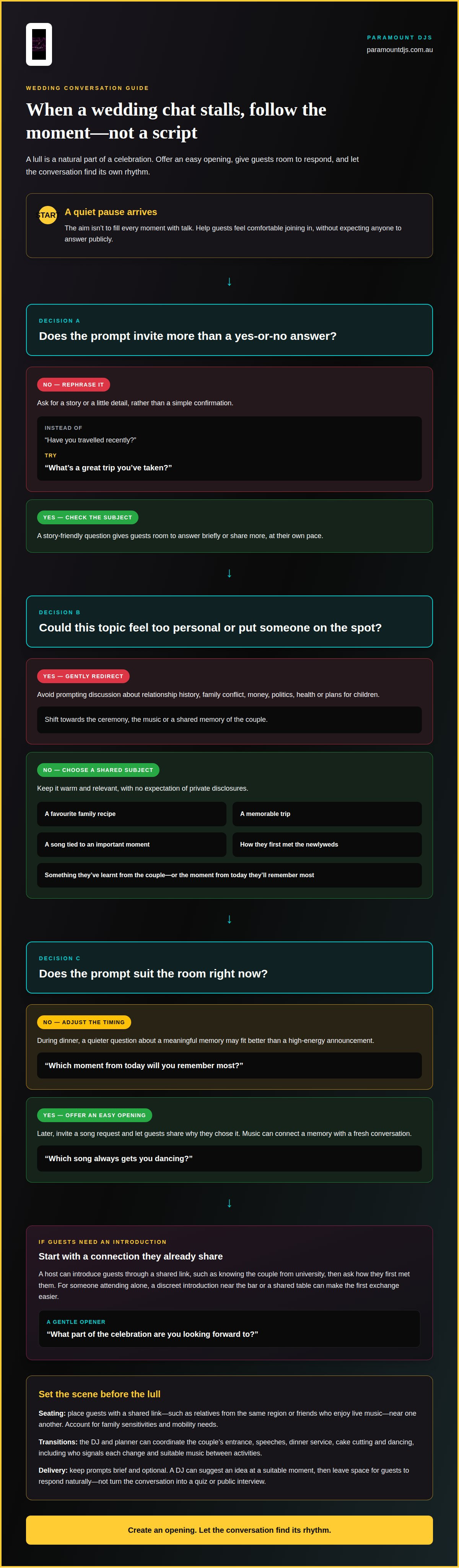
A wedding DJ can encourage conversation with prompts that invite stories rather than yes-or-no answers. For example, “What’s your favourite memory with the couple?” gives guests room to share at their own pace. A gentle announcement can suggest the idea without putting anyone on the spot or expecting a response over the microphone.
A wedding host can help different groups mingle by introducing guests through a shared connection. They might say, “You both know the couple from university. How did you first meet them?” This gives them a starting point and lets the conversation move beyond names and greetings. Asking questions can also help the questioner build rapport.
For guests attending alone, a DJ can coordinate with the host to make a discreet introduction near the bar or a shared table. A prompt such as “What part of the celebration are you looking forward to?” is easy to answer and doesn’t assume guests know the same people. The host can then move on, giving the new conversation room to develop naturally.
Open-ended prompts work best when they’re easy to answer and suited to the moment. During dinner, guests might discuss a favourite place to eat or how they know the newlyweds. Later, a music-related prompt such as “Which song always gets you dancing?” can connect people through shared tastes without asking for personal disclosures.
A DJ can work with the couple and host to choose prompts that suit their guests. Avoid topics that may feel too personal, then use a brief introduction or announcement when energy dips. Wording matters: “What’s a great trip you’ve taken?” invites more detail than “Have you travelled recently?”
For a celebration that needs a confident host and carefully timed music, professional wedding entertainment can help create natural opportunities for guests to connect.
3. Discuss meaningful subjects
A wedding DJ can help guests move beyond small talk with prompts that invite personal stories. For example, “What’s something you’ve learnt from the couple?” gives friends and relatives a chance to share different perspectives. Another gentle prompt is, “Which moment from today will you remember most?” Guests can answer briefly or tell a longer story, depending on their comfort.
Meaningful topics can focus on shared experiences rather than private details. Guests might talk about a favourite family recipe, a memorable trip, a song tied to an important moment, or how they first met the newlyweds. A DJ can choose prompts that suit the reception’s mood and the couple’s preferences, then leave space for guests to chat without turning the moment into a public interview.
A DJ should steer guests away from subjects that could create tension or make someone feel exposed. Avoid prompting conversations about relationship history, family conflict, money, politics, health or plans for children. If a guest raises a sensitive subject, the host can gently redirect the conversation to the ceremony, music or a shared memory of the couple.
Timing matters. During dinner, a quiet prompt about a meaningful memory may suit the room better than a high-energy announcement. Later, the DJ might invite guests to request a song and explain why they chose it. That small story can connect music, memory and conversation without pressuring anyone to speak publicly.
Before the reception, the DJ can discuss suitable themes with the couple or planner. They can identify family sensitivities, topics to avoid and stories the couple is happy for guests to share. This preparation keeps prompts warm and relevant, whether guests are discussing a heartfelt speech or the first dance. The DJ’s role is to create openings for connection, not demand personal disclosures or keep every table talking.
4. Follow new conversation directions
A wedding DJ can use a light activity to shift the room’s energy and give guests a fresh shared topic. Music trivia, for example, can invite tables to guess a song from its opening notes. Keep it brief and optional, so guests can join in without interrupting dinner or feeling singled out. A couple-themed quiz can also prompt stories, as long as the questions are warm and appropriate.
Song requests offer another natural change of direction. The DJ can invite guests to suggest a track and share why it matters, then introduce selected choices before playing them. One guest’s favourite dance-floor song might spark a conversation about a family celebration or memorable concert. A photo booth can also give guests a shared activity, with props or group photos offering an easy reason to mingle.
For couples considering how to avoid awkward silences at a wedding, activities work best when they suit the room and reception schedule. If conversation has gone quiet, a DJ can offer a graceful change of pace without drawing attention. An announcement about the next dance-floor set or an invitation to collect a drink gives guests a natural reason to move.
Knowing how to avoid awkward silences at a wedding also means choosing the right moment to change the pace. If guests are enjoying dinner conversation, a sudden game may feel disruptive; a softer musical shift can keep the atmosphere comfortable. If energy dips after speeches, a lively song request or brief music quiz can offer a new topic. Coordinating with the host helps activities fit the reception.
Share the couple’s preferred atmosphere, planned reception moments and any activities to avoid with the DJ. Those details help shape an experience that suits the guests, from a relaxed table quiz to an invitation onto the dance floor. For wedding entertainment with engaging music and well-timed activities, explore wedding entertainment options.
Couples can also plan what happens after the celebrant announces they may kiss. Decide whether they leave, guests applaud, families follow, photos are taken or signing takes place, then share the order with the DJ so the transition is clear and fits the reception.
Paramount DJs: Wedding DJs
Paramount DJs provides Wedding DJs to shape reception music and entertainment around the couple’s plans. A well-timed song, announcement or transition can give guests a new shared moment and help the celebration move smoothly from dinner towards dancing.
Consider this support when you want music to complement the reception schedule rather than compete with conversation. Share the atmosphere you’re aiming for, key moments such as speeches, and any topics or activities you’d prefer to avoid. Photo Booth Hire can give guests a relaxed shared activity, while DJ & Sax adds live performance to the celebration.
For a considered approach to wedding entertainment, contact Paramount DJs to discuss your reception.
Shape a reception that feels like you
Start by deciding how you want the room to feel, rather than trying to fill every quiet moment. A relaxed pause gives guests space to enjoy dinner, take in the celebration or gather their thoughts. The aim is to make conversation feel welcome, not turn it into another part of the programme.
That balance is central to how to avoid awkward silences at a wedding: create an atmosphere where guests can join in, step back and reconnect naturally. Share your reception priorities, including the mood you want and how involved you’d like guests to be. These preferences can guide the music and pace of the celebration.
If you’re planning your reception and would like professional support with its entertainment, contact Paramount DJs to discuss your plans. A thoughtful approach can help your celebration feel personal, welcoming and unmistakably yours.


