

A party’s final moments matter as much as its first. Knowing how to create a fun party atmosphere starts with welcoming guests warmly, giving them easy ways to connect and building the music and energy gradually. A thoughtful farewell then gives the celebration a satisfying finish.
Good music and lively company help, but the atmosphere doesn’t have to rely on dancing alone. Simple games, a themed drink or mocktail, and spaces for conversation and movement can help guests feel included and at ease.
This guide shares practical ways to shape the experience from arrival to farewell. You’ll find ideas for icebreakers and activities, a gradual music build, drinks that suit your theme, and a clear, personal way to close the party.
Key Takeaways
- Use a light activity to help guests from different circles find common ground and start conversations.
- Shape the music to the event’s flow, moving from relaxed arrival tracks towards more energetic favourites.
- Choose drinks that reflect the party’s theme, with mocktails alongside alcoholic options.
- Close with a clear musical cue and a personal farewell so guests know the celebration is winding down.
1. Encouraging guest connection with games and activities
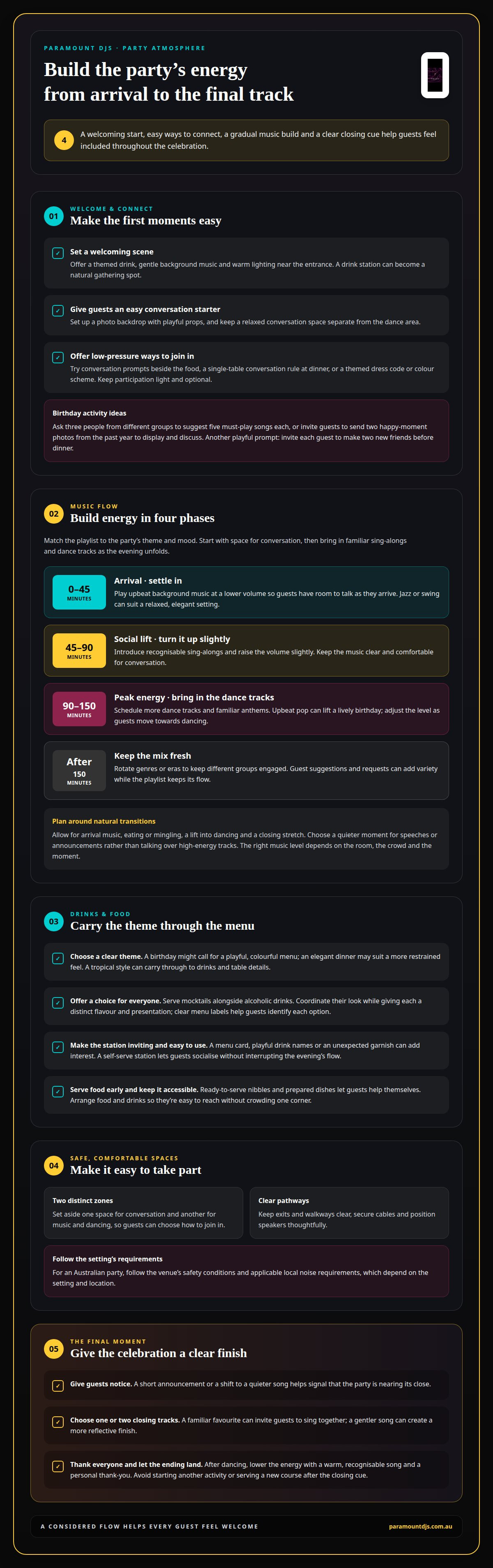
Make the first moments easy. Welcome guests with a themed drink, gentle background music and warm lighting near the entrance. A cocktail bar or drink station can become a natural gathering spot, while a photo backdrop with playful props offers an activity and an easy conversation starter. Keep a separate space for relaxed conversation, away from the dance area.
Give guests from different circles a simple way to contribute. For a birthday, ask three people from different groups to suggest five must-play songs each. Their choices can introduce shared favourites and unexpected discoveries. Another option is to invite guests to send two photos of happy moments from the past year, then display them for people to discuss. These activities give newcomers something specific to talk about.
Playful rules can turn mingling into a low-pressure game. Invite each guest to make two new friends before dinner, or place conversation prompts beside the food. Keep the wording light so guests can join in without feeling put on the spot. At a seated dinner, a single-table conversation rule can help everyone feel included. For a larger gathering, a themed dress code or colour scheme gives guests an easy opening line.
For an Australian party, follow the venue’s safety conditions and applicable local noise requirements, which depend on the setting and location. Keep exits and walkways clear, secure cables and position speakers thoughtfully. Set up two distinct zones, one for conversation and one for music and dancing, so guests can choose how to take part. A welcoming entrance, clear pathways and easy activities help create a lively setting without making participation compulsory.
2. Planning music to build energy over time
Match the playlist to the party’s theme and the mood you want guests to feel. Jazz or swing can suit a relaxed, elegant setting, while upbeat pop can lift a lively birthday. For a birthday playlist, use an arrival phase from 0-45 minutes, with upbeat background music at lower volume. This gives guests space to talk as they settle in.
Build the playlist around a steady progression rather than playing every dance favourite at once. From 45-90 minutes, introduce recognisable sing-alongs and raise the volume slightly to create a social lift. Keep the music clear and comfortable for conversation, then adjust it as guests move towards dancing. The right level depends on the room, the crowd and the moment.
From 90-150 minutes, schedule the peak-energy phase with more dance tracks and familiar anthems. After 150 minutes, rotate genres or eras to keep different groups engaged. Invite guests to suggest favourites beforehand, or use requests to add variety without letting the playlist lose its flow. A mix of upbeat tracks and mellow songs can suit changing moods across the evening.
Plan the party timeline around natural transitions: arrival music, time to eat or mingle, a lift into dancing, then a closing stretch. Avoid placing speeches or announcements over high-energy tracks; choose a quieter moment when guests can listen. A DJ can read the room and adapt the entertainment as the crowd responds. For a celebration that needs music shaped around its flow, Private Party DJ entertainment can help carry the energy from one moment to the next.
Let the event’s theme and energy guide music choices, with genres such as jazz, swing or R&B selected to suit the party. A playlist can combine upbeat, energetic music with mellow, relaxing tracks to complement the event’s mood.
Upbeat rhythms and catchy melodies can energise a crowd, while slow tempos and soothing melodies can promote relaxation and intimacy. A wedding band or DJ can help keep guests on the dance floor.
3. Choosing themed alcoholic drinks and mocktails
Start with the purpose of the gathering. A birthday evening might call for a playful, colourful menu, while an elegant dinner suits a more restrained feel. Let that purpose guide the drinks, food and pace of the event. A clear theme gives guests a sense of the occasion and helps each detail feel connected rather than assembled at random.
Choose a theme that’s easy to carry through. A tropical style can inspire a signature cocktail, a matching mocktail and bright table details. A simple colour scheme works just as well if you’d rather skip costumes. Make the drinks station a focal point with a menu card naming each option. An unexpected garnish or playful drink name adds a small surprise and gives guests an easy conversation starter.
Offer mocktails alongside alcoholic drinks so guests can choose what suits them. Keep the options visually coordinated, but give each one a distinct flavour and presentation. For example, pair a fruit-forward mocktail with a similarly bright signature cocktail. Clear labels help guests identify the choices, while a self-serve station lets them socialise without interrupting the evening’s flow.
Easy party food includes ready-to-serve nibbles and prepared dishes arranged so guests can help themselves. Serve food early alongside drinks, and choose a range of bites to suit the theme and encourage conversation. For a relaxed gathering, set out savoury nibbles near the drinks station; for a sit-down dinner, plan a varied menu that fits the occasion. Keep food and drinks easy to reach without crowding one corner. The best combination supports the gathering’s purpose, looks inviting and gives guests a comfortable reason to pause, chat and enjoy the evening.
4. Ending the party with a clear signal and personal farewell
An ending needs its own moment, not an abrupt stop when the music cuts out. Choose one or two closing tracks that suit the crowd, then let the final song signal that the celebration is winding down. A familiar favourite can invite guests to sing together, while a gentler choice creates a more reflective finish. Either way, make the transition feel deliberate.
Give guests a little notice before the final track. A short announcement or a shift to a quieter song helps people understand the party is nearing its close. After dancing, for example, lower the energy with a warm, recognisable song and thank everyone for coming. Avoid starting another activity or serving a new course after this cue, which can blur the ending.
A personal farewell makes the close feel considered. Thank guests as they leave, mention a shared highlight or acknowledge the people who helped bring the event together. At a birthday, the host might thank friends for travelling to celebrate; at a wedding, the couple could offer a final toast. Keep the words genuine and suited to the gathering, rather than turning the goodbye into another long speech.
Plan the practical details around the final song. Make sure guests can collect coats and belongings, find their transport, and say their goodbyes without crowding one doorway. A clear closing cue and an unhurried farewell help people remember the warmth of the evening, not just the last track. Parties feel more complete when the ending matches their character. To shape a memorable musical finish, plan your party’s final tracks as carefully as its opening.
Paramount DJs: Private Party DJs
Paramount DJs provides Private Party DJs for hosts who want music shaped around their celebration. A DJ can carry the event from relaxed arrival tracks into dancing, then finish with closing songs that suit the crowd. Share the occasion, preferred music styles and key moments to guide the musical direction.
For weddings, Wedding DJs can support the music across the celebration, while Photo Booth Hire gives guests another way to capture and share the occasion. These options can complement the atmosphere without replacing the personal touches, activities and thoughtful ending you’ve planned.
If you’d like help shaping the music for your celebration, contact Paramount DJs.
Make your next celebration feel personal
The best next step is to choose the feeling you want guests to take home. A lively dance floor, relaxed conversations or a shared photo keepsake can each shape their memories differently. Thinking about how to create a fun party atmosphere means considering not only what happens during the event, but what guests will remember afterwards.
Paramount DJs can help bring that vision to life with entertainment suited to the occasion. Wedding DJs support celebrations with music, while DJ & Sax duos add live saxophone alongside DJ entertainment. Photo Booth Hire offers guests another way to capture the moment. Choose the experience that fits your event, then let the details reflect your style.
Ready to plan the entertainment for your celebration? Contact Paramount DJs about your party and take the next step towards an event that feels unmistakably yours.
Frequently Asked Questions
What are the key elements of a fun party atmosphere?
To understand how to create a fun party atmosphere, give guests choices, shared moments and room to respond naturally. Consider how people will arrive, find someone to talk to and move through the event. For example, introduce guests who share an interest, and use a visible schedule to show everyone what’s coming next. Let the plan support the occasion without making every moment feel programmed.
How to choose a party theme that guests will enjoy?
A useful part of how to create a fun party atmosphere is choosing a theme that suits the occasion and gives guests room to interpret it comfortably. A favourite film, era or shared hobby can inspire details without requiring elaborate costumes. Consider whether the idea works for the venue and attendees. Make the invitation clear about what’s optional, so guests can take part in a way that feels right for them.
What party games and activities work for different ages and group sizes?
Pick activities that are easy to understand and let people join in or sit out. For a small gathering, try a conversation prompt at each place setting; for a larger mixed-age party, use a team-based music quiz that lets guests contribute different knowledge. Keep instructions brief, offer a non-competitive option and avoid activities that rely on everyone being comfortable performing in front of a crowd.
What lighting and decorations make a party feel more lively?
Use lighting to distinguish areas and add visual interest without making the whole room equally bright. Keep a table or display well lit, for example, and use softer illumination around seating. Repeat a few colours across signs, table details and decorations to make the space feel intentional. Check the effect from different parts of the room, including the entrance, before guests arrive.
How to make a party welcoming and accessible for all guests?
Share practical event details in the invitation, including the venue address, entry arrangements and the event’s general format. At the venue, keep routes between the entrance, seating, food and facilities clear, and provide chairs away from busy areas. Ask about dietary needs when guests respond, label food clearly and make participation optional so everyone can enjoy the gathering in their own way.


