

A wedding DJ does much more than press play. Understanding what a wedding DJ actually does means looking beyond the playlist: they select and mix music, respond to the dance floor and may provide ceremony sound when that coverage is included. An MC hosts the room, makes introductions and keeps guests informed, while the DJ focuses on music and cues key moments.
It’s easy to assume the music will take care of itself, but the right soundtrack and smooth transitions help shape each part of the day. A DJ can follow the reception schedule and coordinate with your MC, helping key moments flow without taking over the hosting role.
Here’s what to expect from ceremony sound, reception music and timing, and the difference between DJ and MC responsibilities. You’ll also see where a professional wedding DJ can add value, so you can decide what suits your celebration.
Key Takeaways
- Know how a DJ’s music and dance-floor role differs from an MC’s hosting and announcements.
- See how personal music preferences can shape ceremony cues and the reception soundtrack.
- Understand how announcements and coordination around dinner can help key moments flow smoothly.
- Learn how a DJ can use the run sheet, song requests and event transitions to keep the reception moving.
What is the difference between a DJ and an MC?
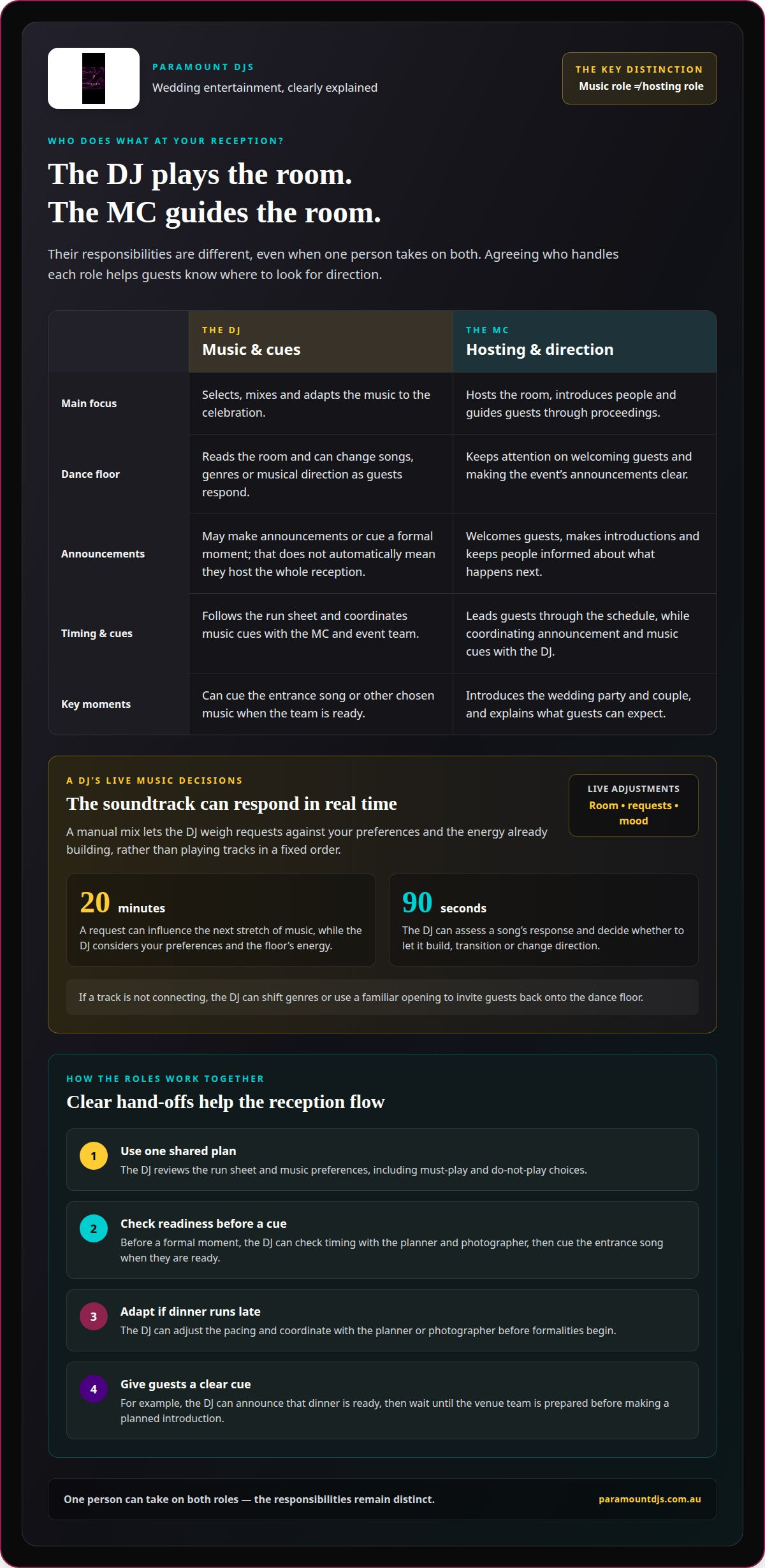
A wedding DJ selects, mixes and adapts the music; an MC hosts the room, introduces people and guides guests through proceedings. One person can take on both roles, but the responsibilities remain distinct. Knowing what a wedding DJ actually does helps you decide who should handle music and who should lead announcements.
Responding to dance-floor energy
Responding to dance-floor energy means changing the next song or musical direction to suit what guests are doing. A manual mix lets the DJ react to movement, requests and the room’s mood instead of following a playlist in order. If a track isn’t connecting, the DJ can shift genres or play a familiar opening to invite guests back onto the dance floor.
A request can influence the next 20 minutes of music. The DJ weighs it against your preferences and the energy already building, rather than treating every request as an instruction. For couples asking what a wedding DJ actually does, this live adjustment is one clear difference from playing a fixed playlist.
Reading and managing the dance floor
Reading and managing the dance floor means noticing how guests respond, then shaping the music to keep the reception moving. A DJ can assess a song’s response after its first 90 seconds and decide whether to let it build, transition or change direction. That judgement helps balance personal favourites with familiar songs guests recognise.
If the floor slows, a recognisable opening may encourage guests to join in. A fixed playlist can’t respond to the room or adapt to an unexpected request.
Music can also be tailored for a key moment. For Reza and Johnnilee Zarrineh’s first dance, a DJ created a five-song megamix, bringing several chosen tracks into one sequence. A custom edit can also shape a single song for a couple’s entrance or first dance.
The MC’s focus is different: welcoming guests, making introductions and keeping the schedule clear. A DJ may make announcements or cue a formal moment, but that doesn’t automatically mean they’re hosting the whole reception. Agreeing who handles each role helps guests know where to look for direction while the DJ focuses on music and transitions.
Does a wedding DJ provide ceremony microphones and speakers?
A wedding DJ may provide ceremony speakers and microphones when ceremony coverage is included. They can cue music for each part, from the processional to the recessional. In Australia, the DJ’s role doesn’t itself settle copyright permissions; requirements depend on how the music is used and the venue arrangements.
Personalised music planning starts with a conversation about the couple’s preferences and important moments. The DJ can note must-play and do-not-play choices, then shape music for the ceremony, cocktail hour, dinner and dancing. For example, a couple might request current dance music alongside classic singalongs, with quieter selections during the meal.
For ceremony sound, a DJ may provide speakers, a wireless microphone for the celebrant or vows, and a handheld microphone for readings. They can manage microphone levels, reduce feedback and cue optional walk-up music for a speaker. Giving the DJ each ceremony cue in sequence helps match the right song to the right moment.
Cocktail-hour music fills the transition after the ceremony without competing with conversation. The DJ can adjust volume and style as guests move between spaces, then build towards the reception. If guests are chatting rather than dancing, a relaxed selection suits the moment; later, the music can shift as the room’s energy changes.
A package may specify a set number of performance hours, with overtime options sometimes available. Ceremony audio, reception microphones and music planning depend on the coverage arranged. For example, ceremony sound may be included alongside reception music, or the booking may cover reception only. A DJ can also mix tracks for smoother transitions while respecting the couple’s selected songs and do-not-play list. These details determine what the booking covers, from the first ceremony cue to the final reception track.
Does a wedding DJ help manage the reception timeline?
Yes. A wedding DJ can follow the run sheet, make announcements and coordinate with the couple’s MC to cue key moments. If dinner runs late, the DJ can adjust the reception’s pacing and communicate with the planner or photographer before formalities begin.
Announcements and dinner coordination
Announcements and dinner coordination mean using clear cues to help guests and the venue move through reception events. For example, the DJ can announce that dinner is ready, then wait to make a planned introduction until the venue team is prepared. This helps avoid calling guests away from a meal or beginning speeches before the room is settled.
If service takes longer than scheduled, the DJ can adapt the order or timing of formal moments with the planner. The run sheet gives the DJ a shared reference, while updates from the venue help keep announcements aligned with dinner service.
Guest direction and introductions
Guest direction means giving people concise information about what happens next, such as where to gather for a group photo or when speeches begin. A DJ acting as MC may welcome guests, introduce the wedding party and couple, and explain what to expect during dinner. These cues help guests follow the event without relying on a playlist for direction.
The couple can choose a separate MC, with the DJ coordinating music and announcement cues with them. That division keeps hosting distinct from music playback. Spotify can play selected songs, but it can’t announce the wedding party or respond when dinner runs late.
Before a formal moment, the DJ can check timing with the planner and photographer, then cue the entrance song when they’re ready. A DJ may help the reception flow, but that role isn’t the same as full day-of coordination. Agreeing who makes each announcement helps prevent missed cues and keeps guests informed.
Managing the reception timeline and transitions
Before the reception, a DJ reviews the run sheet, music preferences and do-not-play list. During the event, they cue music, manage transitions and respond to requests; after the final planned moment, they finish music coverage within the agreed booking hours.
Reception transitions
Reception transitions are the shifts between planned moments, such as dinner, speeches and dancing. A DJ uses the run sheet and cues to move between them without leaving guests unsure what comes next. For example, a planned song can signal the start of a first dance, while a measured change in music can bridge dinner into open dancing.
Adjusting the reception schedule
Adjusting the reception schedule means responding to timing changes while keeping the event’s key moments in view. If dinner runs late, the DJ can move a music cue and coordinate with the planner or photographer before a formal moment. That helps avoid starting an entrance or first dance while the room is still being prepared.
Requests also need to fit the couple’s preferences. A DJ can accept guest requests while respecting the do-not-play list, so a popular song doesn’t override a clear boundary. If an unexpected request suits the room, the DJ can adjust the upcoming music; if it conflicts with the couple’s choices, the planned direction stays clear.
The run sheet helps define responsibilities across the reception. The DJ can coordinate with the venue manager, planner, photographer or live musicians so each person knows when a cue is coming. This is timeline support, not full day-of coordination. The couple’s MC can handle hosting while the DJ manages music and agreed announcements.
Plan your reception music and transitions around the moments that matter to you.
Paramount DJs: Wedding DJs
Paramount DJs provides wedding DJs for couples who want professional music and reception entertainment. A wedding DJ can shape the soundtrack around your preferences, support key music cues and adapt the reception as the schedule unfolds.
Consider a wedding DJ when you want more than a playlist: music tailored to different parts of the day, transitions between formal moments and songs chosen to suit the dance floor. Planning your preferences, important cues and do-not-play choices helps make the entertainment feel personal and cohesive.
If you’re also considering photo booth hire or DJ & Sax duos, these can complement the atmosphere and guest experience. The right choice depends on the celebration you’re planning and the role you want entertainment to play.
Contact Paramount DJs to discuss wedding DJ entertainment for your celebration.
Shape an entertainment plan around your day
Start with the atmosphere you want guests to remember, then let that intention guide your entertainment choices. A lively dance floor, relaxed conversations or a blend of both can each call for a different musical direction. Knowing what a wedding DJ actually does helps you decide which moments deserve their own soundtrack and where you’d like the entertainment to feel more spontaneous.
Paramount DJs offers Wedding DJs, Photo Booth Hire and DJ & Sax duos, giving you options to shape the entertainment around your celebration. Consider which elements feel right for your plans, then discuss the style and key moments you want to prioritise.
Contact Paramount DJs to discuss your wedding and take the next step towards an entertainment plan that feels personal to you.
Frequently Asked Questions
Should I Hire a DJ for My Wedding?
Hire a DJ if you want a professional to manage music across key parts of your wedding, especially if dancing is planned. A DJ can shape the soundtrack around your preferences and respond as the room changes, leaving you free to enjoy the celebration. For a small, relaxed gathering or short daytime reception without dancing, a playlist may suit your plans better.
Can I give the DJ a do-not-play list?
Yes. You can share a do-not-play list alongside your must-play songs and music preferences. Clear details make it easier to avoid an unwanted track, including a particular version or artist. You can also explain why a song is off limits, such as an association you’d rather not bring into the celebration. This gives the DJ useful context when considering requests.
Can you use a playlist instead of a DJ?
Yes, a playlist can work for a small, relaxed gathering, a short daytime reception or a wedding without dancing. The trade-off is that a playlist doesn’t respond to the room, manage requests or adjust to changes in the reception schedule. Someone also needs to oversee music throughout the event, including announcements and formal moments, rather than being occupied with other wedding responsibilities.
Does a wedding DJ create the entire playlist before the wedding?
Not necessarily as a fixed sequence. Music planning can start with your preferred songs, artists and styles, then leave room for the DJ to respond to guests during the reception. For example, a couple might nominate personal favourites and set boundaries, while the DJ chooses the order and transitions to suit the occasion. This balances a personal soundtrack with flexibility on the day.
Does the DJ coordinate with my photographer and planner?
A DJ can coordinate timing with your planner and photographer before formal moments. For example, they can align an entrance or first-dance cue with the photographer’s readiness, so the music starts at the right point. The DJ can also follow run-sheet updates during the reception. This supports the schedule, while responsibility for broader day-of coordination remains with the planner.
How does a wedding DJ coordinate with the MC, venue and other vendors?
The DJ uses the run sheet and agreed cues to coordinate with the MC, venue team and relevant vendors. The MC can lead hosting while the DJ manages music and cues; the venue team can signal when dinner service is ready. The DJ can also coordinate formal moments with a planner, photographer, videographer or live musicians, helping each person understand when their part fits.


