

A Spotify playlist can keep the music playing, but it can’t read the dance floor or make reception announcements. Choosing between a Spotify playlist and hiring a wedding DJ comes down to who you want managing those moments: a playlist follows its set order, while a DJ can adjust the music and help guide the event.
A playlist suits couples who want to choose every song and are happy to arrange playback. A DJ offers a more responsive approach, taking pressure off guests and helping coordinate key moments such as speeches and the first dance. Neither option is automatically right for every wedding.
This comparison looks at how each option handles announcements, changing musical tastes, guest requests and entertainment extras. You’ll see what a playlist can cover, where a DJ offers more flexibility, and how to choose a setup that suits your reception atmosphere and preferred level of hands-on planning.
Key Takeaways
- Choose a playlist if you want a fixed music sequence and someone you trust to manage playback; a DJ can adjust song choices as the dance floor changes.
- Plan how announcements, speeches and key reception moments will be handled, so guests aren’t left managing the music or microphone.
- When comparing costs, consider the complete setup, including sound equipment and who will operate it, rather than music playback alone.
- Factor in your venue’s sound and setup requirements when deciding which option will fit your reception smoothly.
Reading the room and adapting the music
A Spotify playlist follows its preset order; a DJ can change direction as the dance floor responds. Couples weighing a Spotify playlist vs hiring a wedding DJ are deciding how much flexibility they want as the reception moves from dinner into dancing.
A hybrid setup can work when different parts of the day need different levels of attention. For example, play a prepared playlist during cocktail hour, then hire a DJ to manage the reception as the dance-floor energy changes.
Playing Spotify at an Australian wedding doesn’t, by itself, establish whether public-performance licensing is covered. App access and event music-licensing arrangements are separate considerations, so playback alone doesn’t settle the licensing question.
Spotify’s service terms govern how its service may be used. Don’t assume that a playlist authorises public or commercial event use simply because tracks play through the app.
Music Plans for Key Wedding Moments
A party brief gives the DJ a starting point: your music preferences, important songs and do-not-play choices. You can provide separate playlists for cocktail hour, dinner and dancing to set a distinct mood for each part of the day.
Unlike a fixed playlist, a brief helps a DJ select suitable tracks from your choices and their wider music library. A Spotify playlist is optional; the DJ can use your preferences to distinguish background music from dance-floor selections.
Transitions and Consistent Volume
A playlist plays songs in sequence but can’t respond when the room shifts from conversation to dancing. A DJ can change styles as guests respond, rather than letting one genre dominate until the list ends. That responsiveness is a key difference when comparing a Spotify playlist vs hiring a wedding DJ.
Spotify playback depends on a steady internet connection, so plan how you’ll handle key songs and requests if the connection drops. A DJ can prepare essential tracks in their music library. Share your event details and timeline in the party brief to help align transitions with dinner, speeches and dancing.
Keeping guests from having to manage the music
A playlist needs someone to manage the device, playback and sound system throughout the reception. That responsibility may fall to a guest who would otherwise be enjoying dinner, speeches or the dance floor. A depleted phone battery or speaker malfunction can interrupt the music, and resolving technical problems can be difficult without someone assigned to handle them.
If you’re running a Spotify playlist with guest requests, appoint someone to manage playback, collect suggestions and decide which songs fit the planned sequence. Arrange tracks in advance for different parts of the reception, leaving room for requests without handing control of the device to every guest. This can create a smoother flow, but someone still needs to make each adjustment.
Guest requests also need a little judgement. An uncle asking for “Sweet Caroline” every 15 minutes can dominate the dance floor if nobody manages the queue. A DJ can take requests and choose a suitable song by the requested artist, then play it at an appropriate moment rather than interrupting a speech or changing the mood abruptly.
For the ceremony, decide who will cue each music moment and who will handle reception playback. A person managing a playlist also needs to watch the device and respond when a track ends or a request arrives. A DJ can manage playback and guest requests without assigning those tasks to a friend or relative.
A DJ may also bring backup systems for music playback, while a playlist setup relies on the device and audio system arranged for the event. That difference matters if a device battery runs down or a speaker stops working. Keeping someone on playback can help with simple adjustments, but it isn’t the same as dedicated music management.
Before the reception, share must-play and do-not-play preferences, then decide how guest requests should fit. A DJ can balance your preferences with requests as the night unfolds. With a playlist, the appointed person follows the order and makes any changes, leaving less room to react to a sudden shift in the crowd.
How much does a Spotify playlist wedding setup cost in Australia?
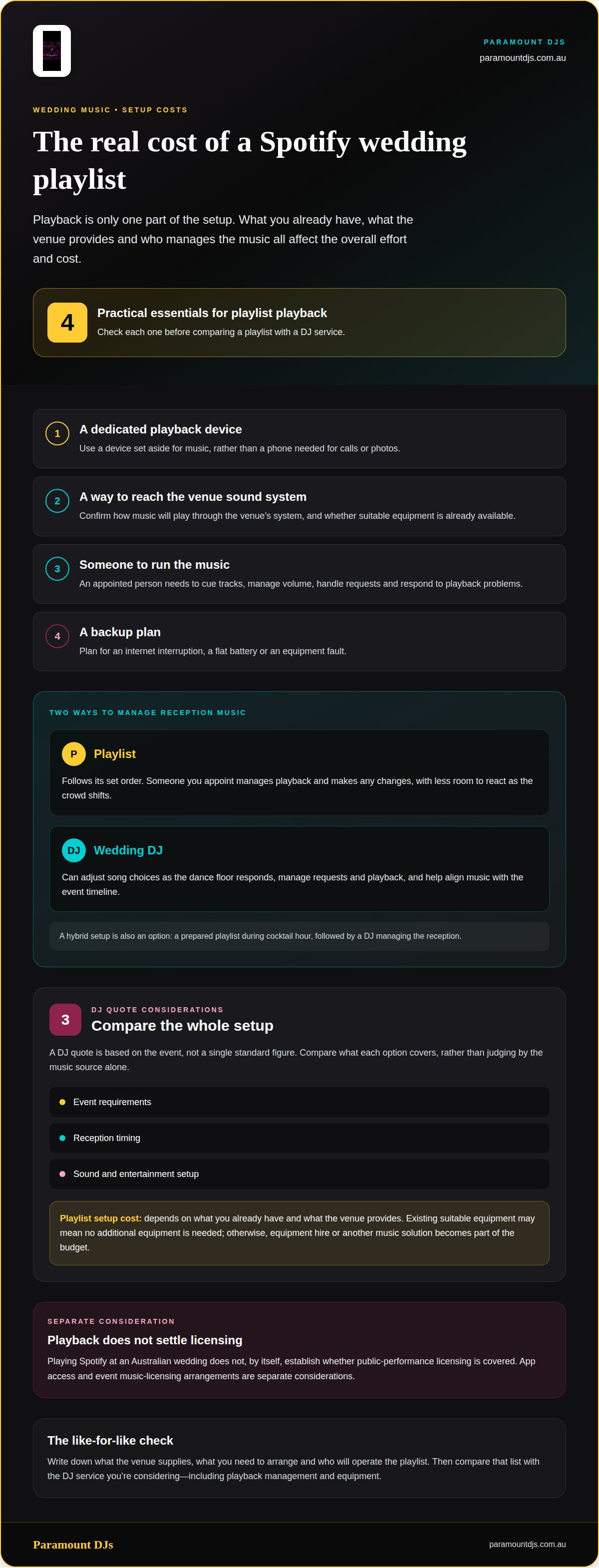
A Spotify playlist doesn’t cover every cost involved in playing reception music. The total setup cost depends on what you already have and what the venue provides. If you have a phone, suitable playback equipment and speakers, you may not need to arrange additional equipment. If not, equipment hire or another music solution becomes part of the budget.
Before comparing options, list the equipment and responsibilities your setup needs:
- A device dedicated to playback, rather than a phone needed for calls or photos.
- A reliable way to play music through the venue’s sound system.
- Someone to cue tracks, manage volume and respond to playback problems.
- A backup plan for an internet interruption, flat battery or equipment fault.
Those practical requirements affect the real value of a playlist. For example, even a couple using existing equipment needs to assign someone to manage it during the reception. If that person misses dinner, speeches or time on the dance floor, the saving comes with a responsibility to weigh against the setup cost.
A DJ quote is based on the event, not a single standard figure. Relevant factors include the event requirements, reception timing, and the sound and entertainment setup. Compare what each option covers, including playback management and equipment, rather than judging by the music source alone.
For a like-for-like comparison, write down what the venue supplies, what you need to arrange and who will operate the playlist. Then compare that list with the DJ service you’re considering. A playlist may suit a simple setup where equipment and a willing operator are already in place; a DJ may be a better fit when dedicated music management is part of the plan.
Paramount DJs’ Wedding DJs service isn’t simply playing a couple’s Spotify playlist at their wedding. That distinction matters when comparing the options: a playlist-led setup and a DJ service are different arrangements, even if both involve music at the reception. Focus on what each option entails and whether it matches how you want the event’s music managed.
Do Australian wedding venues require DJs or impose music and sound restrictions?
Whether you need a DJ depends on the venue’s event conditions, not simply on choosing Spotify. Venue rules can also shape speaker placement, when amplified music must finish and how sound is managed. A playlist doesn’t override those conditions, so review your venue agreement before settling your entertainment plan.
Look for written details about music and equipment, then clarify anything that affects your setup. For example, a venue may set an end time for amplified music or limit where speakers can be positioned. Those conditions affect both a hired DJ and a playlist played through speakers.
Some venues require vendors to be insured. If yours does, that requirement can affect arrangements for a DJ, regardless of whether the music comes from Spotify. A playlist avoids hiring a DJ, but it doesn’t remove conditions that apply to equipment, access or sound at the venue.
Before choosing, establish these details with the venue:
- Whether its conditions require a professional DJ or allow a self-managed playlist.
- Any permitted music finish time or sound-level restrictions.
- Where playback equipment and speakers can be set up.
- Whether vendor insurance requirements apply to your entertainment arrangements.
- Who is responsible for operating equipment and following venue instructions.
Then match the setup to the room. A small reception with a venue-provided sound system may suit a playlist if the venue permits it and someone can manage playback. A larger dance floor or a schedule with speeches and music cues may call for a DJ to manage the entertainment within the venue’s conditions.
Share the venue’s event details and timeline with the person managing the music. That helps avoid a mismatch, such as planning amplified dancing beyond the venue’s permitted finish time. If a professional setup better suits your reception, explore wedding DJ entertainment for a music-led approach that can fit your event plan.
An experienced DJ package focuses primarily on music and makes announcements as required, with hits from the 1950s to contemporary party anthems; basic guest or vendor interaction suits events not requiring full event coordination.
Paramount DJs: Wedding DJs
Paramount DJs provides Wedding DJs for couples who want a professional to manage the music throughout their reception. It’s a natural next step if you’d rather not assign a guest to operate a playlist, handle requests and manage playback.
Share your music preferences, must-play songs, do-not-play choices and reception timeline to help shape a personalised plan. A DJ can use your brief to select music for different moments and respond to the dance floor as the celebration unfolds.
If you’d like to add another entertainment element, Photo Booth Hire is also available. Choose a setup that suits your reception and the experience you want guests to enjoy.
To discuss Wedding DJs for your celebration, contact Paramount DJs.
Shape the celebration you want
Choosing a Spotify playlist versus hiring a wedding DJ is really about the experience you want to create. Think beyond the first song: consider how you want the reception to feel, who will shape its entertainment and what guests will remember after the final track.
There’s room to make the entertainment personal. Paramount DJs offers Wedding DJs, Photo Booth Hire and DJ & Sax, giving you different ways to shape the celebration around your plans. Choose the approach that feels right for your day, whether music is the focus or you’d like to add another interactive element.
For a professional conversation about your wedding plans, contact Paramount DJs about your wedding. A clear entertainment plan is a confident step towards a celebration that feels unmistakably yours.
Frequently Asked Questions
What tasks does a wedding DJ handle beyond playing music, such as MC duties and reception coordination?
A wedding DJ can make agreed announcements, introduce the wedding party and cue reception moments such as the grand entrance, first dance or cake cutting. They can also coordinate music cues with the reception timeline and communicate with other vendors about timing. MC support varies by arrangement, so clarify whether you want brief announcements or a more active role guiding the event.


