

A live band isn’t automatically the best choice for a lively reception. In the wedding DJ vs live band comparison, a DJ suits couples who want continuous music and flexibility across genres, while a band brings the energy and interaction of a live performance. Bands typically take breaks of 15 to 20 minutes per hour of performance, so the choice also affects how music flows through the night.
Both options can create a memorable dance floor, but in different ways. A DJ can move between songs and styles as guests respond, while live musicians can adapt arrangements and extend choruses to match the room’s energy.
This guide compares the wedding DJ vs live band options across cost considerations, guest experience, musical flexibility, space and set breaks, without quoting service prices. You’ll see when each format fits, when combining live performance with a DJ makes sense, and how to choose entertainment for your reception and guests.
Key Takeaways
- Plan for music between live band sets: bands typically take breaks of 15 to 20 minutes per hour of performance, while a DJ can keep the reception soundtrack going.
- Match the entertainment to your venue’s space and noise limits, as these can shape whether a full band, DJ or combination is the practical fit.
- Choose a band for the character and energy of live performance, or a DJ for broad song choice and smooth transitions between styles.
- Think about your guests’ musical tastes and how they respond to live interaction when deciding which option will bring them onto the dance floor.
- Consider a blended approach if you want live performance moments alongside a DJ-led reception.
Do live bands play continuously at weddings?
No. A live band usually performs in sets with breaks, while a DJ can keep music playing throughout the reception. Plan the running order around those pauses, your music preferences and the atmosphere you want to create.
Live band set breaks
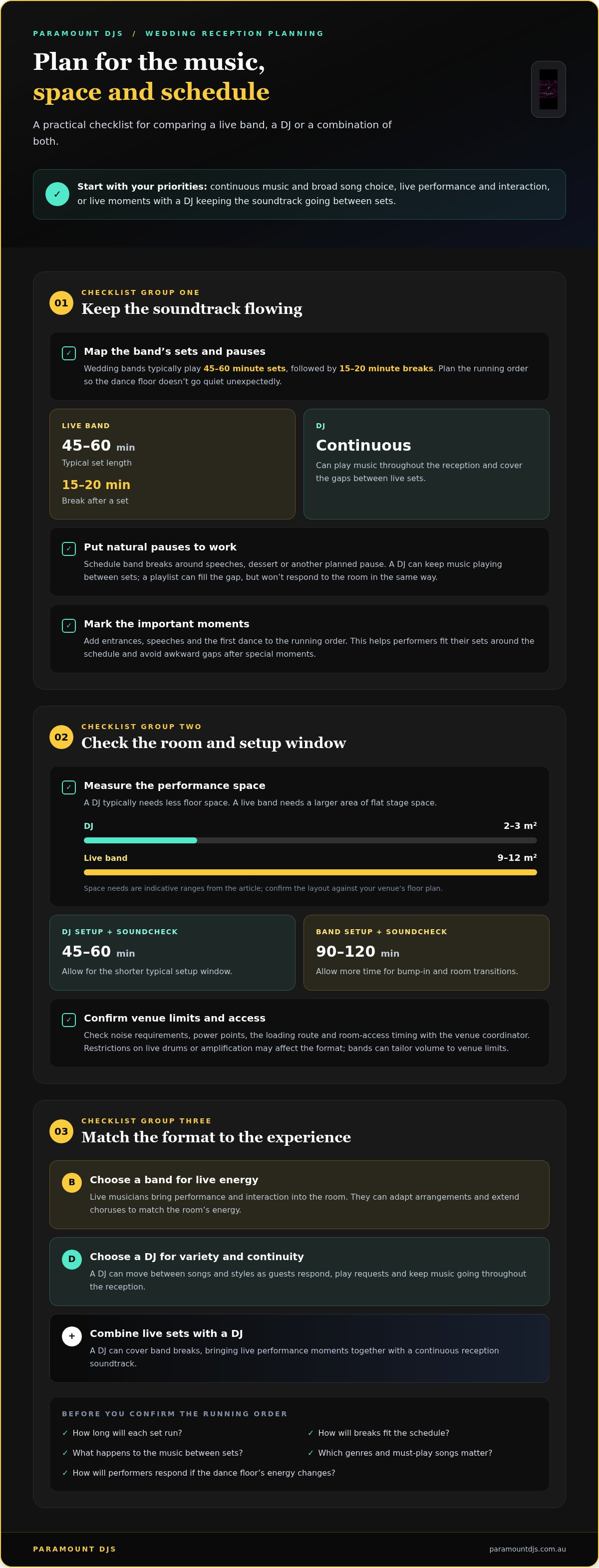
A live band performs in planned sets rather than continuously. Wedding bands typically play 45-60 minute sets, followed by 15-20 minute breaks. A four-piece band at a five-hour reception may perform four sets of 45 minutes each. Schedule breaks around speeches, dessert or another natural pause, rather than letting the dance floor fall quiet unexpectedly.
A DJ can play music during the band’s breaks, keeping the reception moving between live sets. A playlist can also fill the gaps, but it won’t respond to the room in the same way. This difference matters if continuous, adaptable music is a priority, especially during an energetic evening reception.
Music across reception stages
Plan the music around the reception’s changing energy. For example, feature live music during the ceremony or canapés, then bring in a DJ for dinner transitions and dancing. A band can make the first dance a standout moment; a DJ can then carry the party forward with recorded versions and a wider range of songs.
Add key moments to the running order, including entrances, speeches and the first dance. This helps performers fit their sets around the schedule, avoiding interruptions to speeches and awkward gaps after special moments.
How many musicians are typically included in Australian wedding band packages? There’s no standard lineup. Options may include an acoustic duo or trio, a four-piece band or a five-piece band, depending on the performance style and available space.
How far in advance should you book a wedding DJ or live band in Australia? Aim to book 12-18 months ahead, particularly for weddings between May and September. Another common recommendation is six to twelve months ahead, so earlier planning can give you more room to choose.
What questions should you ask before hiring a wedding DJ or band? Ask how long each set runs, how breaks fit the schedule and what happens to the music between sets. Discuss preferred genres, must-play songs, special moments and how the performers will respond if the dance floor’s energy changes.
Let your musical tastes guide the decision. A band’s rehearsed covers create a distinctive live sound, while a DJ can move between genres and play requests as the reception unfolds. If you want musicians interacting with the room, live performance may suit; if variety and continuous music matter most, a DJ may be a better fit.
| Option | Music continuity | Reception feel |
|---|---|---|
| Live band | Sets with breaks | Live performance and musical interaction |
| DJ | Can play continuously | Flexible mix across genres and tracks |
| Band with DJ | DJ can cover band breaks | Combines live sets with continuous music |
Choose a live band for the energy of musicians performing in the room, a DJ for continuous variety, or both for live sets without breaks in the soundtrack.
How do cost and budget affect the live band vs DJ choice?
Consider your budget alongside the venue’s practical limits. A live band needs more floor space and setup time, while a DJ’s smaller footprint may suit a tighter room. These differences can affect staging, access and the running plan, as well as the entertainment spend.
Entertainment pricing depends on the performers, performance length, equipment, travel and venue logistics, with the price given after a quote request. Compare what each arrangement covers, rather than judging the options by the headline fee alone. For example, a hybrid setup may combine live performance with a DJ, but its cost depends on the performers and production involved.
Space is a clear point of difference. A DJ typically requires 2-3 square metres, while a live band typically needs 9-12 square metres of flat stage space. A compact reception room may make a DJ easier to accommodate; a larger venue may have room for musicians without crowding tables or reducing dance-floor space.
Sound limits matter too. Some venues restrict live drums or amplification, which can influence the format couples choose. Live bands can use electric instruments, including electric drums, and tailor volume to a venue’s limits. Discuss the venue’s sound requirements and planned performance with the entertainment team before finalising the arrangement.
Setup timing also affects the schedule. Live bands typically need 90-120 minutes for setup and soundcheck, while wedding DJs typically need 45-60 minutes. For a venue with a short room-access window, that difference may affect bump-in timing, room transitions and when other suppliers can work.
Include power and access in the logistics discussion. Walk through the performance area with the venue coordinator, identify available power points and map the route from the loading area to the stage. This can reveal practical constraints, such as a narrow entrance or a performance area separated from the nearest power supply.
- Small room: A DJ’s 2-3 square metre footprint may preserve space for guests.
- Dedicated stage: A band’s 9-12 square metres needs to fit without obstructing the room.
- Noise-sensitive venue: The venue’s limits can shape instrument choice and sound levels.
- Tight bump-in: Allow for the different setup and soundcheck windows.
Before booking, confirm the floor plan, noise limits, power access and setup window with the venue. Couples weighing a hybrid format can explore venue live entertainment as part of their room and sound planning. Choose the option that fits the budget and lets the venue operate smoothly, while still delivering the atmosphere and continuous music you want.
How do atmosphere and guest experience compare?
A DJ shapes the reception with recorded tracks and flexible transitions; a live band brings musicians into the room. The key difference is whether you want a broad, adaptable playlist or the energy and visual impact of live performance.
DJ-led reception atmosphere
A DJ can move between genres and eras, shaping the playlist as the reception develops. For example, a couple might choose relaxed background music during dinner, then switch to familiar dance tracks after the first dance. Recorded versions let guests hear songs they know, while smooth transitions help maintain the mood.
This format suits couples who want variety for different tastes. A DJ can take requests and adjust the selection as guests respond, making the atmosphere feel responsive rather than fixed to one style.
Live band performance atmosphere
A live band puts musicians at the centre of the entertainment. Guests see and hear the performance unfold, from vocals and instruments to interaction with the dance floor. A familiar cover can feel fresh in a live arrangement, creating a focal moment that recorded music delivers differently.
That presence brings its own character. A band’s sound and repertoire shape the mood, so its musical style has a strong influence on the overall feel compared with a DJ’s broader recorded playlist.
Consider how guests will experience the entertainment, not just what they’ll hear. If guests enjoy watching musicians, a band can make the performance part of the occasion. If your group prefers moving between styles, a DJ can switch from pop to rock or dance tracks without changing performers.
The format also affects how the atmosphere changes through the evening. A live band can turn the first dance into a shared performance, then build energy in its next set. A DJ creates momentum differently, using song choices and transitions to move from one part of the celebration to another.
Think about the mix of guests at your reception. If grandparents, friends and younger relatives have different favourites, a DJ’s range of genres can include more tastes. If guests share an enthusiasm for a particular sound, such as soul or rock covers, a band focused on that style can give the celebration a distinct musical identity.
Picture a specific moment to guide your decision: guests singing along to a band’s live chorus, or joining the dance floor as a DJ plays a well-known track. Choose the atmosphere that best reflects your celebration and the experience you want guests to remember.
Matching entertainment to the guest profile
Choose entertainment for the guests you’re bringing together, not just your favourite genre. A reception with relatives, friends and colleagues may call for broad musical variety, while a group with shared tastes might enjoy a focused live performance. Consider who’ll be dancing, listening or chatting throughout the evening.
Start with a practical planning step: ask guests for song suggestions in their RSVPs. Group the replies by genre, era and mood, then look for common ground. A DJ can respond to requests and adjust the playlist as the reception develops, helping bridge preferences for current dance tracks and familiar classics.
A live band brings a more defined repertoire and an unmistakable visual element. Wedding bands typically have a rehearsed selection of 50 to 80 songs, so the setlist can help you assess how well their style suits your guests. If a band’s covers match the crowd’s tastes, musicians performing those songs live can turn a familiar chorus into a shared moment.
Think about the age range without assuming everyone in a group wants the same music. A DJ can move from hits of the 1950s through to today’s party anthems, while a band can make its chosen genres feel like a live spectacle. For a mixed group, compare the playlist range with the band’s repertoire and note which option better covers your guests’ preferences.
Guest count affects the room’s feel as well as the entertainment format. For weddings with 150 or more guests, a hybrid approach is increasingly common. Couples can use live music for a standout moment, then a DJ for a wider dance-floor mix. In a smaller reception room, consider how musicians, instruments and guests will share the available space.
Use these questions to make the decision more specific:
- Which songs or genres appear most often in guest suggestions?
- Do guests want a visual performance, or a broad playlist they can dance to?
- Would a live set add a memorable moment, with a DJ covering other styles?
- Can the room accommodate the entertainment without crowding tables or the dance floor?
Then match your answers to the reception schedule. A live band can deliver a focal performance, such as the first dance, while a DJ can carry varied requests through the evening. If guest tastes differ, combining the two can balance live performance with musical range. The best fit reflects the people in the room and the moments you want to share.
Live performance flexibility and audience interaction
Live performance flexibility isn’t limited to choosing songs before the wedding. Bands can adapt arrangements, extend choruses and change genres in response to the dance floor. A DJ offers a different kind of flexibility, adjusting recorded tracks and responding to requests as the reception unfolds.
That distinction shapes how guests participate. A band can stretch a chorus while guests sing along, or shift its sound when the dance floor responds to a particular style. Musicians create those moments in real time. A DJ can move quickly between familiar tracks, giving guests with different tastes a reason to join in.
Neither format needs a strict song-by-song plan. Share your preferred genres, essential songs and any styles you’d rather avoid, then leave room for performers to respond to guests. If a soul number fills the dance floor, for example, a band can extend its chorus, while a DJ can follow with another track that keeps the mood going.
Consider interaction as well as repertoire. Some couples want the visual connection of musicians performing live, while others prefer the pace and variety of a DJ-led set. An acoustic performance can create an intimate feel for a ceremony or canapés, while higher-energy arrangements can suit dancing later in the evening.
Plan the transitions, too. If a band is playing sets, decide what should happen between them so the atmosphere doesn’t feel disconnected. A DJ can provide continuous music during breaks, while a playlist offers a prepared alternative. Choose based on how actively you want the music to respond to the room.
Use these steps to shape the brief:
- Set the direction: Name the genres and moods that feel right for your reception.
- Choose key moments: Identify songs for the entrance, first dance and any planned singalong.
- Allow a response: Give performers room to adapt when guests react strongly to a track or arrangement.
- Plan the handover: Decide how music should continue between live sets.
For couples choosing between formats, the practical question is how they want audience interaction to happen. Choose live bands for musicians who can reshape a performance around the dance floor. Choose a DJ for fast shifts between tracks and requests. If you want flexible music selection and a responsive reception soundtrack, explore wedding DJ entertainment.
Paramount DJs: Wedding DJs
Paramount DJs provides Wedding DJs for couples who want tailored music and a lively reception soundtrack. If a DJ suits your guest mix, music preferences and plans for the evening, this is a natural next step.
Share the atmosphere you want to create, the genres you enjoy and key songs for special moments. You could also consider DJ & Sax for live musical energy alongside DJ-led entertainment, or Photo Booth Hire to give guests another way to engage.
Paramount DJs can help shape wedding entertainment around the experience you want to create. To discuss your wedding entertainment, contact Paramount DJs or visit paramountdjs.com.au.
Choose the soundtrack that feels like you
The wedding DJ vs live band decision becomes clearer when you picture a signature moment from your celebration. Imagine the sound you want as you enter the reception, share your first dance or invite guests onto the floor. That image can guide your choice more meaningfully than trying to satisfy every preference at once.
A wedding DJ vs live band comparison is most useful when you focus on the experience you want, rather than treating either format as the default. Paramount DJs offers Wedding DJs, Photo Booth Hire and DJ & Sax, giving you options for music and guest engagement to suit different celebration styles.
If a DJ-led soundtrack feels right, contact Paramount DJs about your wedding to discuss the atmosphere you have in mind. Your celebration can have a soundtrack that feels personal, polished and ready for the moments you’ll remember.
Frequently Asked Questions
Wedding Band vs DJ: Which Is Right for Your Reception?
Choose a band if live performance is central to the celebration; choose a DJ if broad song choice and easy changes between styles matter most. Consider your guests’ musical preferences, the room layout and how you want key moments to feel. A close-knit group that loves singing together may enjoy a band, while guests with varied tastes may benefit from a DJ’s wider selection.
What does wedding entertainment cost?
The cost depends on the entertainment format, performers, performance time, equipment and event logistics. A solo DJ, live act and combined arrangement have different requirements, so compare the scope of each quote rather than the headline figure alone. Consider separate entertainment elements, such as a photo booth, too. The price depends on the event and is provided after a quote request.
Can You Have Both?
Yes. Couples can combine live music and a DJ to create distinct experiences during the celebration. For example, use an acoustic performance for the ceremony, then a DJ for the reception, or feature a live act for a special moment and a DJ for the rest of the evening. Plan the handover, timing and performance space together so each element fits naturally into the schedule.
Does a DJ or band take up more space?
A band generally needs more performance space because several musicians and instruments share the area. A DJ typically requires 2-3 square metres, while a live band typically needs 9-12 square metres of flat stage space. Compare those footprints with your venue’s floor plan, including guest seating and the dance floor. This helps you see whether the entertainment can fit without disrupting the room layout.
Is a DJ cheaper than a band?
A DJ may be the more cost-effective option, while a band’s cost reflects the performers and production involved. The difference varies with the lineup, performance requirements and event logistics, so a simple comparison may not show what each option includes. For a fair decision, compare equivalent performance time and inclusions, then weigh recorded music against the character of live musicians.
What are the most common hybrid approaches?
Common combinations include live acoustic music during the ceremony or canapés, followed by a DJ for the reception. Another option is to feature live performers for the first dance or selected sets, with a DJ handling other parts of the evening. DJ & Sax also blends a live instrument with DJ-led music. Choose a combination around the moments you want to highlight.
How much does a wedding DJ cost in Australia?
There isn’t one price for every Australian wedding. The quote depends on the event’s requirements, including performance duration, music preferences, equipment needs, timing and logistics. A simple reception plan differs from one involving several scheduled moments or additional entertainment. Outline your format and requirements in a quote request to understand the cost for your event.
What are the pros and cons of a DJ versus a live band for a wedding reception?
A DJ offers a broad range of recorded tracks and can shift quickly between genres, but doesn’t provide the visual presence of musicians performing live. A band creates a distinctive live show, though its repertoire and arrangements shape the musical range. Consider which trade-off matters more to your guests. If your reception needs a particular musical identity, compare the band’s style or the DJ’s selection with that preference.


