

Reliable wedding sound is planned for the whole celebration, not left to a last-minute volume check. Match the sound setup to the venue, coordinate key transitions with the wedding team and shape the music around each part of the day. Complete wedding entertainment solutions bring these elements together in a package tailored to your celebration.
It’s natural to focus on the playlist, but clear sound and well-timed changes help the day flow smoothly. The right combination can support ceremony music, set the mood during cocktail hour and carry the energy into the reception, so the entertainment feels connected rather than like a series of separate bookings.
This guide explains how music, sound equipment, lighting, supplier coordination and tailored packages can support each stage of your wedding. You’ll also learn what to consider when planning reliable sound and choosing an entertainment setup that suits your venue, schedule and atmosphere.
Key Takeaways
- Plan music around the ceremony, cocktail hour and reception so each part of the day has a distinct atmosphere.
- Match the sound setup and lighting to the venue, layout and key moments to help the celebration run smoothly.
- Share the entertainment timeline with your wedding vendors so announcements, entrances and transitions are coordinated.
- Build a tailored package around your priorities, such as a DJ, live musical elements or a photo booth.
- Book entertainment as part of your wider planning timeline, factoring in your date, venue and the experience you want for guests.
Ceremony, cocktail-hour and reception music
Plan music for three distinct moments: the ceremony, cocktail hour and reception. A clear running order helps the entertainer match each selection to the day’s schedule.
Personalised Playlists and Song Requests
Build a playlist around meaningful songs, preferred genres and the atmosphere you want at each stage. For example, list ceremony selections separately from reception favourites, then note songs you’d rather not hear. Share requests and timing details with the entertainer before the event. A couple’s music might range from Australian rock from the 1960s to present-day tracks.
Dance-Floor Entertainment
Reception music needs to work for the guests in the room, not just the playlist on paper. Give the DJ a few anchor tracks, such as your first-dance song and favourite dance-floor styles, while leaving room to respond to the crowd. A wedding DJ can read the room, select music and make announcements that connect key moments, such as the couple’s entrance.
DJ and Live Music Combinations
A DJ and live musician can bring contrasting textures to one celebration. For example, a guitarist might perform during the ceremony or cocktail hour, while a DJ carries the reception into dancing. One reported wedding used three acoustic sets before the entertainer switched to DJing. If you’re considering a DJ, MC and live music package, map out who handles announcements, live sets and transitions.
For the ceremony, choose processional and signing music, then set a different tone for cocktail hour. A harpist, violinist, pianist or guitarist can perform during the ceremony and later at the reception. Share the running order with the entertainer, including the couple’s entrance, first dance and speeches, so the music cues follow the planned sequence.
Australian noise restrictions and venue rules depend on the location and the venue’s conditions. Ask about amplified-sound limits, quiet hours and any required finish time before finalising the music plan.
Are wedding entertainers required to have public liability insurance in Australia? Requirements can depend on the venue and event arrangements. Ask the venue what insurance documentation it requires and add that to your booking checklist.
When choosing an entertainment provider, ask how they’ll manage song requests, announcements and transitions between the ceremony, cocktail hour and reception. Also discuss how they’ll adapt the music if the schedule changes or the dance floor responds differently than expected.
Sound equipment, lighting and effects
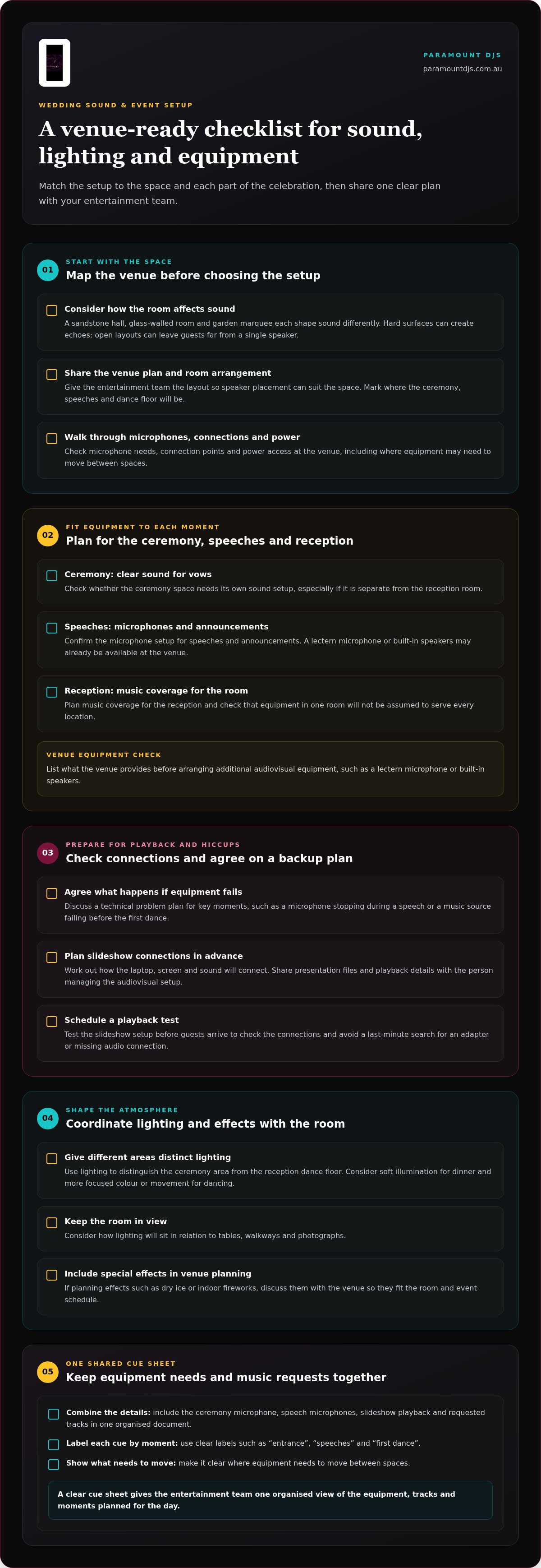
Reliable sound depends on matching equipment to the venue, room layout and event schedule. Start with the ceremony location, then consider how sound needs will change for speeches and dancing.
Venue acoustics and backup equipment
A sandstone hall, glass-walled room and garden marquee each shape sound differently. Hard surfaces can create echoes, while open layouts may leave guests far from a single speaker. Share the venue plan and room arrangement with the entertainment team so speaker placement suits the space. Identify where the ceremony, speeches and dance floor will be.
Discuss how the setup will handle a technical problem during a key moment. For example, agree on what happens if a microphone stops working during a speech or a music source fails before the first dance. Include microphones, connection points and power access in the venue walkthrough, and use the room’s layout to inform the plan.
Sound and audiovisual equipment hire
List what the venue already provides before arranging additional audiovisual equipment. A venue may have a lectern microphone or built-in speakers, while a separate ceremony space may need its own sound setup. Match equipment to each activity: clear speech for vows and announcements, and music coverage for the reception. Don’t assume equipment in one room will serve every location.
For a slideshow, plan how the laptop, screen and sound will connect, then schedule a test before guests arrive. Share presentation files and playback details with the person managing the audiovisual setup. This helps avoid a last-minute search for an adapter or a missing audio connection.
Lighting and special effects
Lighting can distinguish the ceremony area from the reception dance floor. Consider soft illumination for dinner and more focused colour or movement for dancing. Note how lighting will sit in relation to tables, walkways and photographs. If you’re planning effects such as dry ice or indoor fireworks, include them in venue planning so they fit the room and event schedule.
Equipment and song requests
Send equipment needs and music requests together in one organised document. Include the ceremony microphone, speech microphones, slideshow playback and any requested tracks. Label each item by moment, such as “entrance”, “speeches” or “first dance”. This gives the entertainment team a clear cue sheet and shows where equipment needs to move between spaces.
If sound planning needs to work around a venue’s existing setup, venue live entertainment can bring the performance and event setting into the same conversation.
Coordinating entertainment with wedding vendors
Entertainment works best when its cues fit the wedding schedule and other suppliers’ plans. Give the celebrant, photographer, venue team and entertainer one shared running order.
Start with the ceremony timeline. Mark the celebrant’s welcome, processional, signing and recessional, then note who signals each music cue. For example, the photographer may need time for family portraits before guests move to cocktail hour. Sharing the sequence helps the entertainment team avoid playing over instructions or interrupting a formal moment.
Next, map transitions between spaces. If guests move from a garden ceremony to an indoor reception, identify when the room will be ready and who directs the changeover. The venue coordinator can advise when tables, accessways and the dance floor are prepared. Give the entertainer an updated schedule if speeches, meal service or the couple’s entrance shifts.
Agree on cue ownership before the wedding day. A practical running order can record:
- Who introduces the couple and signals their entrance.
- Which supplier cues the first dance and any planned performance.
- When the photographer needs a pause for formal images.
- Who updates the entertainer if the reception schedule changes.
Coordinate speeches with the caterer and venue team. For example, schedule speeches between courses only after agreeing on microphone handover and service timing. The entertainer can make announcements while the MC or nominated speaker follows the agreed order. This avoids competing instructions, such as serving a meal while guests are asked to gather for a toast.
For a live performance, confirm set times with the venue coordinator and other suppliers. A photographer may want to capture a first dance without guests crossing the frame, while catering staff need clear access to the room. Recording these details in the schedule gives everyone a shared reference and makes changes easier to communicate.
Use one current version of the run sheet, rather than separate timelines with conflicting times. Include supplier names, arrival or setup details, cue descriptions and the person responsible for updates. Send revisions to everyone affected, especially the venue coordinator, photographer and entertainment team. On the day, nominate one contact to communicate timing changes, so multiple suppliers don’t receive different instructions.
For weddings with several locations or a tightly sequenced programme, venue live entertainment can be planned alongside the venue’s schedule and supplier handovers. A coordinated approach connects entertainment cues to the practical flow of the event, from guest arrival through to the final formal moment.
Customisable wedding entertainment packages
Tailored packages let couples combine entertainment to suit the celebration they’re planning. Make choices around your priorities, venue and schedule rather than treating every wedding as the same event.
Customising Entertainment Packages
Begin with the moments you want to shape, such as guest arrival, dinner or dancing. Then choose entertainment that supports those moments instead of adding options without a clear purpose. A photo booth, for example, gives guests a chance to take pictures and print keepsakes, while a DJ can provide music throughout the reception.
Consider how each element fits the schedule. A choreographed number with the couple or a flash mob can create a planned feature, while music carries the celebration between formal moments. Write down each choice beside its intended time, then review the package as one connected experience.
Matching Entertainment to Venue, Guests and Budget
To suit your venue, guest list and budget, first consider the room layout, event style and activities your guests are likely to enjoy. A compact reception may call for a focused setup, while a larger celebration could benefit from entertainment that engages guests in different ways. Prioritise the moments that matter most, then shape the package around them.
The price depends on the scope, duration, venue and entertainment selected, and is provided after a quote request. Separate essential choices from optional additions, then decide which extras will bring genuine value to your guests.
Use a simple decision list to compare options:
- Venue: Note the spaces used and how guests will move between them.
- Guest experience: Choose whether the focus is dancing, keepsakes or a planned performance.
- Schedule: Place each entertainment feature beside the moment it supports.
- Budget: Rank the essentials first, then consider additions within your spending plan.
For example, a couple who prioritise dancing might centre their package on reception music, then add a photo booth if printed keepsakes suit their guests. Another couple might prefer a choreographed performance as a focal point, with music supporting the rest of the evening. These choices make a package personal without requiring every available option.
Before settling on a combination, make sure each element has a clear role and fits the venue’s schedule. A cohesive package brings the entertainment choices, timing and guest experience together rather than making them compete for attention. This helps couples make deliberate decisions and shape a celebration around their priorities.
How far in advance should couples book wedding entertainment in Australia?
Book wedding entertainment once your date and venue are set, then refine the details as the schedule takes shape. There’s no single lead time that suits every Australian wedding. The date, venue, entertainment format and planning complexity all affect how early to secure a booking.
Start with your preferred date and the experience you want to create. A popular date or a venue with limited setup access can make early planning especially useful. If you’re considering several elements, such as a DJ and live performance, allow time to coordinate their roles, timings and spaces.
Use this sequence to keep decisions clear:
- Confirm the wedding date and venue.
- Decide which parts of the celebration need entertainment.
- Set your priorities, such as ceremony music, reception dancing or live performance.
- Discuss the schedule, venue layout and entertainment requirements.
- Record agreed choices and share updates as plans develop.
For a ceremony and reception at separate locations, plan the transition early. Travel time, access and setup arrangements can affect the running order. Share both venue details with the entertainment team, then note where music or announcements are needed at each location. This clarifies the scope before the final schedule is complete.
If you’re still finalising your plans, begin with the essentials. Decide whether you want music throughout the celebration or only at selected moments, such as the reception. Then outline the atmosphere you’re aiming for and any key songs or formal cues. These decisions give the booking conversation a practical starting point while other wedding details take shape.
As the date approaches, update the running order with confirmed ceremony times, speeches and reception milestones. Tell the entertainment team about changes that affect arrival, setup, performance timing or venue access. A revised schedule is more useful than an outdated draft, particularly when several suppliers share the same spaces.
Booking timing also depends on how customised the experience will be. A straightforward DJ booking has different planning needs from a programme combining several locations, live entertainment and carefully timed performances. Decide which elements are essential first, then allow time to coordinate the details that shape the guest experience.
Ready to plan the timing and format of your celebration? Discuss your wedding entertainment plans.
Wedding entertainment services across Australia can be customised to suit the couple. Wedding dancers can perform a flash mob or a choreographed number with the couple.
Live bands, soloists and duos can create a romantic atmosphere for a wedding ceremony or the couple’s first dance. Booking a wedding entertainer can also ease the work and stress of organising entertainment yourself.
Paramount DJs: Wedding DJs
Paramount DJs provides Wedding DJs for couples planning music and entertainment around their wedding day. A tailored discussion can help connect your preferred atmosphere, schedule and venue with an entertainment format suited to your celebration.
Choose the elements that match your priorities. DJ & Sax combines DJ entertainment with live saxophone, while Photo Booth Hire gives guests an interactive way to capture keepsakes. Focus on the moments where these options will add value, rather than selecting extras without a clear purpose.
Whether you’re organising reception music or adding another guest experience, Paramount DJs can help shape an entertainment plan around your event. Contact Paramount DJs to discuss your wedding entertainment.
Shape the celebration around what matters most
Your entertainment choices can reflect the feeling you want guests to carry home: a favourite song shared on the dance floor, a lively musical moment or a keepsake from the reception. Decide which experience feels most personal to you, then build your plans around it.
Paramount DJs offers Wedding DJs, Photo Booth Hire and DJ & Sax for a tailored approach. These options can shape a celebration around music, guest interaction or live performance, depending on the atmosphere you have in mind. Complete wedding entertainment solutions are most meaningful when each element connects with your plans, rather than being added simply for the sake of having more.
Choose your priorities, note the moments you want to make memorable, and take the next planning step with a clear direction. Contact Paramount DJs about your wedding to discuss your celebration and entertainment plans. Your day can feel distinctly yours from the first song to the final dance.
Frequently Asked Questions
How do you make sure the sound stays reliable throughout the night?
Plan a sound check using the actual microphones, music source and playback device. Listen from different areas where guests will sit or dance, then adjust for speech clarity and music coverage. Agree on a contact person for the venue and entertainment team if an issue arises. A practical contingency plan should explain how the programme can continue if an audio source or microphone needs attention.
Just need a quote?
Yes. Send the wedding date, venue, event type and your early entertainment ideas to request a tailored quote. Paramount DJs can recommend a solo DJ, suitable additions or a broader package based on the details you provide. Once you choose an option, confirm the booking and finalise the music, timing and setup details. Sharing your priorities upfront helps make the recommendation relevant to your celebration.
What services are included in complete wedding entertainment packages in Australia?
Package options vary, so choose elements that suit your event rather than assuming every option is bundled. Complete wedding entertainment solutions can bring together DJ entertainment, tailored playlists and professional-grade sound and lighting. Paramount DJs also offers Photo Booth Hire, DJ & Sax and Karaoke Hire. Share the moments you want covered, such as dinner or dancing, to help shape a suitable combination.
How much do wedding entertainment packages cost in Australia?
The price depends on the event and is provided after a quote request. The scope of entertainment, venue arrangements and selected additions can affect the package. For a useful quote, include your date, venue, event type and preferred options, such as a DJ or photo booth. This gives the recommendation a clear basis without relying on a broad price range that may not reflect your plans.
What wedding ceremony, cocktail hour and reception entertainment options are available?
Options include a DJ for reception music, live musicians for ceremony or cocktail-hour atmosphere, and combinations such as DJ & Sax. Harpists, violinists, pianists and guitarists can perform during wedding ceremonies and later receptions. Live bands, soloists and duos can also suit a ceremony or first dance. Choose based on whether you want background music, a featured performance or an evening centred on dancing.
What equipment and backup plans should wedding entertainers provide?
Discuss the equipment needed for your programme, including speakers, lighting, microphones and presentation playback. Paramount DJs offers professional-grade JBL speakers, lighting effects, smoke machines and microphone options. Agree on how the entertainment plan will handle a technical interruption, such as a microphone issue during speeches or a music source stopping. Decide who will communicate with the venue team and how the schedule can continue if equipment needs attention.


