
A memorable corporate gala needs more than a polished room. It needs an atmosphere that feels connected from arrival to the final song. Creating a vibe for a corporate gala starts with a theme that reflects the event’s purpose and audience, then carries through the lighting, audio-visual production and guest experience. Each detail should feel considered, not compete for attention.
Choosing a theme can feel like the biggest decision, but the strongest impression comes when the look, sound and flow work together. That applies whether you’re celebrating a milestone, recognising achievements or bringing key people together.
This article explains how to choose a fitting theme, use lighting and production to support it, and welcome guests from the moment they arrive. You’ll also find practical entertainment ideas for an engaging, polished evening that feels unmistakably yours.
Key Takeaways
- Choose a gala theme that reflects the event’s purpose and audience, then carry it through the details guests will notice.
- Use lighting, audio-visual elements and branded touches to support the atmosphere without distracting from the programme.
- Shape a welcoming arrival with clear signage, a considered reception and an easy transition into the evening.
- Match entertainment to the occasion, balancing shared moments with options that invite guests to participate.
What’s a good theme for a corporate awards night?
Start with the reason for gathering. Corporate galas can celebrate company milestones or annual performance, recognise employees, clients or partners, and strengthen stakeholder relationships. Choose a theme that makes that purpose visible instead of decorating around an unrelated idea. For example, a milestone dinner could use a timeline of achievements as a visual thread, from arrival signage to award introductions.
Keep the concept practical. An Illumina-inspired awards-night glamour theme could pair jewel-toned details, reflective surfaces and warm lighting, while keeping the stage and award moments clear. A more relaxed Australian example comes from Mid North Coast Local Health District, where a gala paired cocktails and gowns with moleskins and boots. The contrast made the dress and setting feel distinctive without losing the celebratory mood.
Recognition should shape the programme as well as the room. Decide which achievements matter, then give each award a clear category, concise introduction and moment in the spotlight. If the night celebrates annual performance, use the theme to connect individual contributions with shared progress. A coherent approach to creating a vibe for a corporate gala helps these moments feel part of one story.
For Australian accessibility, licensing and safety planning, include accessible routes and seating, clarify venue responsibilities for applicable licences, and follow the venue’s safety procedures. Assign these tasks during planning so they inform the layout, suppliers and event run sheet.
Balance formality with comfort through deliberate contrasts: pair a polished awards stage with conversational lounge seating, or formal dress cues with relaxed pre-dinner music. The Mid North Coast Local Health District example shows how contrasting dress expectations can create a welcoming, locally grounded feel.
Avoid choosing a theme before defining the event’s purpose, or leaving recognition details until the program is built. Begin gala planning 9 to 12 months before the event by defining purpose, audience, budget and venue. That sequence gives the theme a clear brief and helps keep awards, décor and guest experience aligned.
Audio-visual technology, lighting and production
Lighting and audio-visual choices should support the event’s purpose, not compete with it. Start with the run sheet: identify speeches, awards, dinner service and transitions, then match each moment with clear sound and visual cues. This gives every production choice a practical role. A milestone presentation, for example, needs legible slides and even stage lighting, while the shift to dancing calls for a noticeable change in energy.
Plan the room as a sequence of guest experiences. Use brighter lighting and clear signage at arrival, then create a warmer, more intimate feel around dinner tables. Branded centrepieces, lighting and signage can reinforce company identity at a corporate gala. Keep logos and event colours consistent across these details, the stage backdrop and presentation slides, so the room feels unified rather than crowded with competing messages.
Consider a practical scenario: guests can’t hear an award presenter over dinner conversation. Before doors open, review speaker placement, volume and transitions in the programme. A sound check with the host speaking from the stage can reveal issues a playlist test may miss. The result is clearer recognition moments and fewer interruptions during service.
Coordinate production details in one shared run sheet. Include slide order, presenter names, music cues, lighting changes and who signals each transition. Give the host and production team the same final version. Test presentation files on the event system, check microphones from the stage and confirm key visuals are visible from the seating area. These steps help prevent avoidable pauses and mismatched cues.
For instance, if a company awards presentation leads into a lively closing, plan the lighting and audio transition together. A gradual shift can preserve the formality of the awards while signalling that guests can relax. If music is part of your run sheet, explore corporate event entertainment ideas that fit the occasion. Thoughtful production makes each part of the evening feel connected.
Guest experience and first impressions
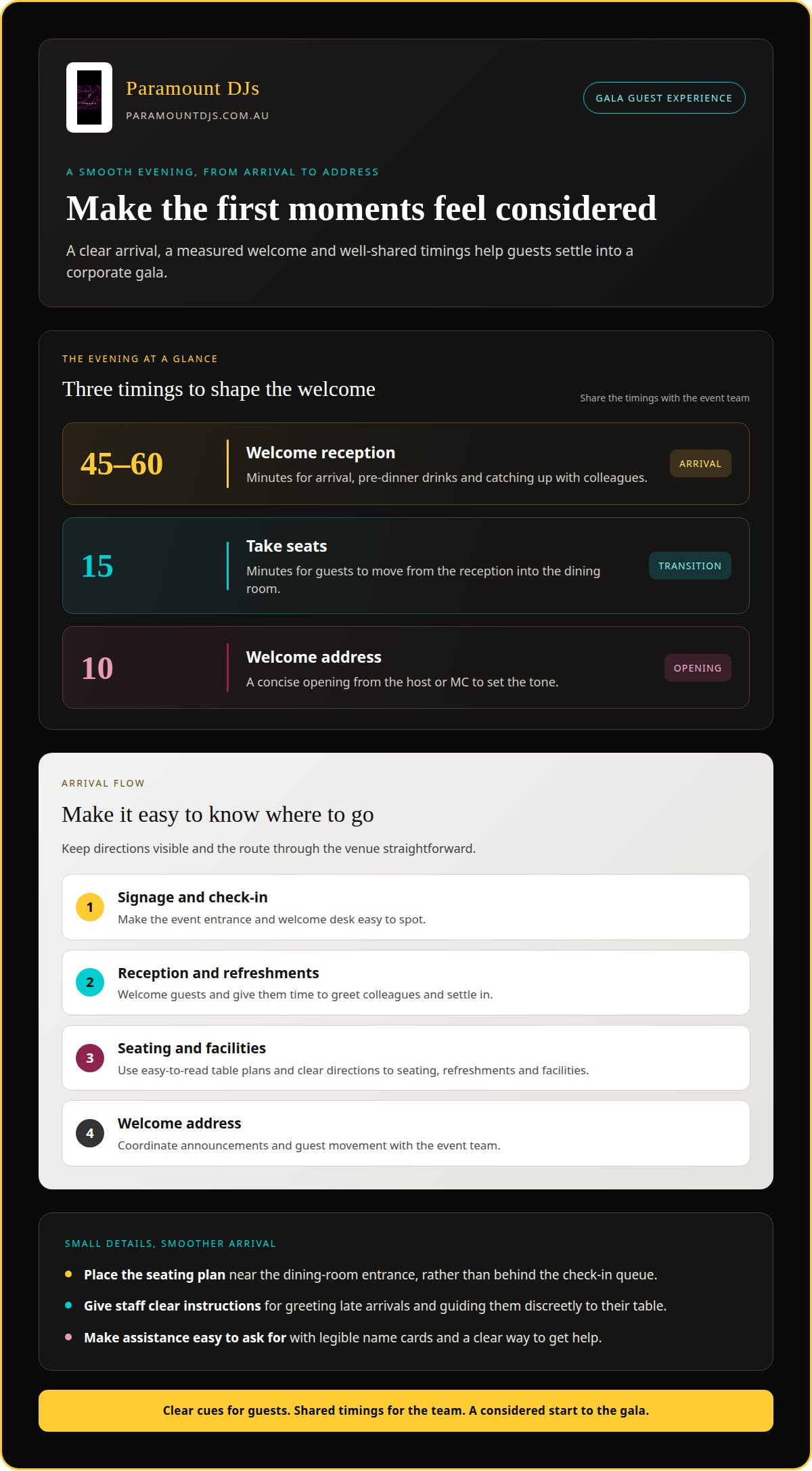
Guests begin forming an impression before they reach the dining room. Plan the arrival as a sequence: clear event signage, an easy check-in point, then a warm welcome from hosts. For a gala dinner, allow 45 to 60 minutes for the welcome reception and pre-dinner drinks. That window gives guests time to arrive, greet colleagues and settle into the evening.
Picture a guest arriving while colleagues are already inside. A visible welcome desk and a host ready to direct them can prevent uncertainty at the entrance. Use easy-to-read table plans and make the route from reception to the main room obvious. This creates a smoother transition and gives guests more time to connect before formalities begin.
Consider the full guest journey, not just the entrance. Check that signage leads guests to registration, refreshments, seating and facilities without unnecessary backtracking. For example, place the seating plan near the dining-room entrance, not behind the check-in queue. A simple floor plan helps staff guide guests consistently and keep arrival areas clear.
Give the evening a measured start. A gala dinner program may allow 15 minutes for guests to take their seats, followed by a 10-minute welcome address from the host or MC. Share these timings with the event team so service, announcements and guest movement work together. A concise welcome can set the tone without holding guests away from dinner for too long.
Thoughtful details make the welcome feel personal. Use legible name cards, give staff brief instructions for greeting late arrivals, and provide a clear way to ask for assistance. If someone arrives after the welcome, a staff member can guide them discreetly to their table. These practical touches make the evening feel considered from arrival through the first toast.
Corporate gala entertainment ideas for Australian events
Choose entertainment for the role it needs to play. A gala celebrating team achievements may suit an upbeat opening, followed by a quieter dinner and a lively finish. For a stakeholder event, a polished live performance can create shared conversation without competing with speeches. Map each moment against the run sheet so the entertainment complements the evening rather than interrupting it.
Live music can give an Australian gala a distinctive sense of occasion. For example, a band or featured performer can welcome guests, then return after the formal awards. If the program includes a keynote or presentation, keep entertainment separate from that focus. This contrast lets the audience listen attentively, then shift naturally into celebration.
Interactive photo or experience activations can encourage guests to participate and create social content. Consider a themed photo moment that reflects the company’s identity rather than a generic backdrop. If guests arrive early and have little to do before dinner, a staffed activation gives them a shared activity and makes the reception more engaging.
Plan the entertainment early enough to shape the rest of the program. Gala organisers should confirm catering direction, book entertainment and engage production suppliers 6 months before the event. Then agree on the performance’s role, cues and handover with the host. A keynote, presentation or entertainment segment may last 20 to 30 minutes, so build transitions into the schedule.
For a company milestone, the situation might call for a formal awards presentation followed by a celebratory close. The action is to select entertainment that suits both moods and brief the event team on the transition. The result is a programme that feels purposeful, not like separate events stitched together. Plan entertainment for your corporate gala as part of that programme.
Most gala dinners run for 3-5 hours, including pre-dinner drinks and the formal program, with optional post-event entertainment. Use that full evening arc to consider where guests may need a welcoming activity, a focused formal segment or a more relaxed close, while keeping each element aligned with the event’s purpose.
Gala organisers should finalise the program, menus, seating plans and vendor logistics 3 months before the event. This helps coordinate entertainment with the meal and key moments, and gives suppliers a clear plan for timing, cues and transitions. A well-ordered schedule can keep the evening cohesive while leaving room for guests to connect.
Paramount DJs: Wedding DJs
Paramount DJs can bring your gala’s entertainment plan to life with Corporate Event DJs. This suits events where music needs to support the evening’s flow, from guest arrival through awards to a celebratory finish. Share the event’s purpose, preferred atmosphere and programme moments so the entertainment fits the occasion.
For a distinctive live element, DJ & Sax combines DJ entertainment with saxophone performance. Photo Booth Hire adds an interactive guest activity and memorable event photos. These options can complement a formal awards programme while giving guests more ways to enjoy the occasion.
Choose the format that best suits your event’s mood and schedule. To discuss entertainment for your corporate gala, contact Paramount DJs or visit paramountdjs.com.au.
Shape the moment guests will remember
Before finalising event decisions, choose one signature moment that expresses what you want guests to feel. It might be a shared celebration, meaningful recognition or an energetic finish. Let that intention guide the remaining choices, so creating a vibe for a corporate gala feels personal rather than borrowed from a template.
Paramount DJs can help bring your entertainment vision to life. Its experience with Wedding DJs informs celebratory occasions, while Photo Booth Hire adds an interactive guest feature and DJ & Sax brings a distinctive live element to the evening. Consider which option best suits your event’s character and programme.
Keep the next step simple: share the kind of atmosphere you want and the role entertainment should play. Contact Paramount DJs about your gala to discuss an entertainment direction that feels right for your event. With a clear signature moment to build around, you can move towards a gala that feels considered, welcoming and unmistakably yours.
Frequently Asked Questions
Questions About Event Theming?
Start by choosing the feeling guests should take away, then use it to guide visual and interactive details. A “future-focused” awards night, for example, could feature forward-looking table names, a timeline of company goals and a guest message wall. Keep the idea easy to understand from the invitations onwards. A theme works best when guests recognise it without needing a detailed explanation.
What’s a fun theme for a corporate party or gala event?
A coastal-glam theme can suit a corporate celebration, with deep ocean colours, polished metallic accents and relaxed styling. Take inspiration from the setting without making every detail literal: table names might reference local landscapes, while a photo backdrop uses an abstract wave pattern. For a playful touch, invite guests to add a message about a shared team achievement, supported by professional audio and lighting from Paramount DJs.


