

The wrong song can shift the mood of a wedding reception. Creating a wedding do-not-play list means identifying tracks whose lyrics, personal associations or style don’t suit your celebration, then sharing those preferences clearly with your DJ. Include specific songs, artists or genres, and say whether each exclusion is firm or allows exceptions.
It’s reasonable to want a lively dance floor without hearing a song that brings up an awkward memory, clashes with your values or simply isn’t your taste. A thoughtful list doesn’t control every moment; it gives the music a clear direction while leaving room for guests to enjoy themselves.
Here, you’ll learn how to weigh troubling lyrics, personal connections and guest preferences, with examples of songs couples may choose to leave off. You’ll also see how to make your boundaries clear without narrowing the playlist so much that it loses its energy and variety.
Key Takeaways
- Look beyond a song’s title and beat; its lyrics may tell a very different story.
- Weigh each track’s personal meaning to you as a couple, not just its reputation or popularity.
- Give your DJ clear song and artist exclusions, and spell out any exceptions or guest-request preferences.
- Set boundaries that protect the atmosphere you want while leaving room for a mixed crowd to enjoy the music.
1. Songs with possessive, stalkerish or controlling lyrics
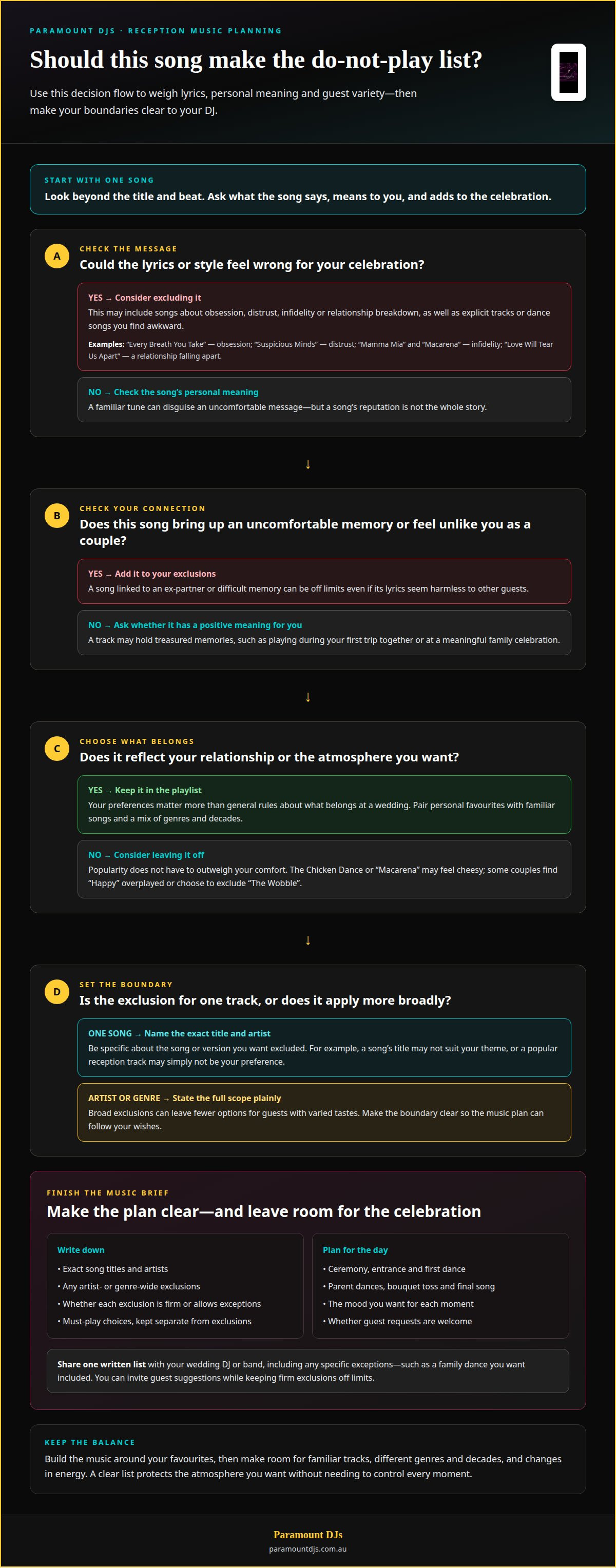
Wedding do-not-play lists often exclude songs about obsession, distrust, break-ups or infidelity, as well as explicit tracks and dance songs the couple finds awkward. Examples include The Police’s “Every Breath You Take”, ABBA’s “Mamma Mia” and the “Macarena”. Some couples also exclude songs linked to an ex-partner or difficult memories, even if the lyrics seem harmless to other guests.
A familiar tune can disguise an uncomfortable message. The Police’s “Every Breath You Take” is often mistaken for a love song, though its theme is obsession. Elvis Presley’s “Suspicious Minds” centres on distrust, while Robin Thicke’s “Blurred Lines” is controversial and may feel inappropriate at a wedding. “Strokin’ It” is another track that could prompt awkward moments on the dance floor.
Cheating and relationship breakdown are other reasons to exclude a song. ABBA’s “Mamma Mia” describes a cycle of cheating, breaking up and getting back together; “Macarena” involves multiple infidelities. Joy Division’s “Love Will Tear Us Apart” focuses on a relationship falling apart. These themes may jar with a celebration of commitment, even when guests recognise the songs and know the dances.
Popular dance tracks can still clash with your preferences. The Chicken Dance and “Macarena” may feel cheesy, while some couples consider Pharrell Williams’ “Happy” overplayed. “The Wobble” may attract guest requests, but you can exclude it if you dislike it. A song’s popularity doesn’t have to outweigh your comfort or the atmosphere you want.
For a clear music plan, list exact song titles and artists, identify any artist- or genre-wide exclusions, and state whether guest requests are welcome. Mark firm exclusions as non-negotiable so requests for those songs can be declined. A written agreement or attached music brief can record your preferences and any specific exceptions, such as a family dance you want included.
Considering a couple’s personal connection to a song
A song’s reputation doesn’t tell the whole story. A track some couples avoid may hold treasured memories for you and your partner, perhaps because it played during your first trip together or became part of a meaningful family celebration. If it reflects your relationship, you can include it. Your preferences matter more than general rules about what belongs on a wedding playlist.
Build the celebration playlist around personal favourites, then add familiar songs and a mix of genres and decades. That balance can make the music feel like yours while giving guests different ways to join in. For example, pair a meaningful song with crowd-pleasing tracks that suit the mood and invite dancing. Not every choice has to be familiar to everyone.
When creating a wedding do-not-play list, talk through songs that bring up uncomfortable memories, feel unlike you as a couple or simply aren’t songs you want played. Record exact titles and artists where possible, then say whether an exclusion applies to one song or an entire artist or genre. Keep requests and must-play choices separate from firm exclusions. This approach makes your intentions clear while leaving room for music that suits your style.
Submit your music requests and do-not-play list once you begin planning the reception music, then share any changes before the event. Send the same written list to your wedding DJ or band, with clear notes about whether guest requests are welcome and which exclusions are non-negotiable. A wedding DJ can use those preferences to shape the music around your celebration, while keeping your personal choices at the centre.
Choosing a song that others might skip can make a moment more intimate, especially when its lyrics, melody or shared history captures something distinctive about your relationship. The choice doesn’t need to make sense to every guest; its meaning to you and your partner is enough.
Personal favourites can sit alongside familiar tracks and music from different genres and decades, giving guests with different tastes a chance to find something they enjoy. Consider how each selection contributes to the atmosphere you want, rather than judging it only by its wider reputation.
3. Balancing music restrictions with a mixed crowd
A mixed-age guest list may bring different tastes, so make exclusions specific instead of banning broad styles by default. If explicit lyrics could feel awkward, identify the song or version you want excluded. Billy Idol’s “White Wedding” may not suit a white wedding despite its title, while some couples exclude Journey’s “Don’t Stop Believin’” despite its popularity at receptions. Choose restrictions that reflect your theme and comfort, not assumptions about what every guest enjoys.
Guest requests can add variety without overriding your boundaries. You might invite suggestions on RSVP cards, then tell the person managing the music which requests are welcome and which songs remain off limits. Explain any exceptions clearly, such as a line dance your family loves. This lets guests contribute while protecting the preferences you’ve set for the reception.
Plan music for the event’s different moments rather than treating the reception as one continuous dance floor. Consider separate choices for the ceremony, reception entrance, first dance, parent dances, bouquet toss and final song. A romantic first dance can lead into familiar hits, while alternating faster and slower tracks gives guests room to rest and return. Keep the lyrics and energy appropriate to each moment.
To create the atmosphere you want, tell the person organising the playlist how each part of the day should feel. For example, request a relaxed welcome, a celebratory entrance and an energetic final set, then note any songs or artists that would disrupt that flow. Keep the list workable: excluding an entire genre can leave fewer options for guests with varied tastes. If you want a broad ban, state it plainly so the music plan can follow your wishes.
Leave room for clean transitions and a change of direction if guests respond differently than expected. Save favourite tracks for peak moments.
4. Why create a wedding do-not-play list
Creating a wedding do-not-play list gives you a practical way to shape the celebration’s atmosphere. It identifies songs that could distract from the meaning of the day, bring up difficult memories or simply feel wrong for the occasion. A track might be popular, but that doesn’t make it right for your wedding playlist. Clear exclusions help keep the music aligned with the experience you want.
The list also makes your decisions easier to communicate. Instead of relying on a vague instruction such as “keep it romantic”, name the songs, artists or themes you want avoided. Then separate firm exclusions from personal preferences. A song you never want played is different from a style you’d rather hear less often. That distinction gives the person managing the music useful direction.
How many songs should be on a wedding do-not-play list? There’s no set number. Include every track or artist you genuinely want excluded, and make each choice clear rather than adding songs to reach a target.
A focused list can prevent unwanted interruptions without dictating every musical choice. Review each entry together: does it protect an important boundary, suit your shared taste or avoid a moment that could feel uncomfortable? Remove exclusions based only on someone else’s opinion if a song holds positive meaning for you. The goal is a wedding playlist that reflects you as a couple, not one that leaves no room for surprise.
Share the final version with whoever is organising the music, and explain which exclusions are non-negotiable. That gives them a clear reference if guests make requests and helps keep the event’s mood consistent. For music tailored to your celebration, explore wedding DJ options.
Paramount DJs: Wedding DJs
Paramount DJs offers Wedding DJs for couples who want their music choices to shape the reception. Share your must-play tracks, firm exclusions and any exceptions as part of your event planning, so the music reflects the atmosphere you have in mind.
A wedding DJ can bring different parts of the celebration together, from the reception entrance to the final song. For a distinctive live element, DJ & Sax duos combine DJ entertainment with saxophone performance. Photo booth hire can also give guests an interactive activity alongside the music.
Your do-not-play list is a useful starting point for a conversation about the sound and feel you want on the day. Contact Paramount DJs to discuss your wedding music and entertainment.
Set your music direction before the final planning handover
Before the wedding day, bring your music decisions together in one clear plan. Creating a wedding do-not-play list helps make your preferences easy to follow while leaving room for the atmosphere to build naturally. Keep the final version with your reception schedule so the music and key moments work together.
Paramount DJs offers Wedding DJs, Photo Booth Hire and DJ & Sax duos, giving you options to shape the entertainment around your celebration. A focused conversation about the feeling you want, from the first song to the last, can turn your notes into a considered event plan.
Ready to talk through your wedding music? Contact Paramount DJs about your wedding and take the next step towards a celebration that feels unmistakably yours.
Frequently Asked Questions
What should you consider?
Consider whether each song suits your values, shared memories and the atmosphere you want to create. Think about your guests, too: explicit lyrics may feel out of place at a family reception, while a favourite dance song could work in a clean version. Discuss choices with your partner and distinguish personal dislikes from firm boundaries before sharing the final music direction.
Should a wedding do-not-play list include artists, genres, or specific song versions?
Use specific song titles and artists for precise exclusions, and name a whole artist or genre only if you want every track excluded. If your concern is a particular recording, identify the version, such as an explicit edit, rather than banning every version of the song. This detail can prevent misunderstandings when someone might otherwise choose a clean edit, remix or cover.
What are common wedding music planning mistakes to avoid?
Avoid leaving music choices until the final planning handover, assuming a song’s title reflects its lyrics or making restrictions so broad that there’s little room for variety. Don’t rely on verbal instructions alone; keep the final list clear and consistent. For a DIY playlist, listen from beginning to end beforehand and check the transitions so abrupt changes or silences don’t interrupt the reception’s flow.


