

The biggest wedding dinner music mistake is choosing songs for the playlist rather than for the atmosphere. The best music to play during the wedding dinner feels personal while staying in the background. Plan enough music to cover the meal and allow the soundtrack to continue if the schedule shifts. Choose songs with meaning for you, then shape their sound and energy to suit the room.
It’s natural to want favourites and special memories in the mix. The key is balancing those personal touches with music that lets guests chat comfortably, whether your celebration feels relaxed, elegant or full of old-school charm.
A professional DJ can bring those ideas together by selecting meaningful tracks, matching the music to your wedding atmosphere and coordinating must-plays with the schedule. Keep the dinner soundtrack cohesive and welcoming, with a planned transition into the next part of the celebration.
Key Takeaways
- Share the songs and musical memories that matter to you so a professional DJ can shape a dinner playlist around your story.
- Choose a consistent mood, with enough variety in tempo and style to keep the soundtrack welcoming while guests chat.
- Prioritise must-play tracks and align them with key moments in the reception schedule.
- Consider whether recorded music or live entertainment better suits the dinner atmosphere and the energy you want to create.
How a professional DJ incorporates personally meaningful songs into your wedding playlist
A personal dinner soundtrack starts with the stories behind your favourite songs. A professional DJ can shape your choices around shared memories, family traditions or music that marked an important moment together. Share which tracks feel essential and which styles you both enjoy. That context helps distinguish meaningful selections from songs that simply sound familiar.
Favourite albums can offer a natural framework for a cohesive playlist. For example, Fleetwood Mac’s Rumours provides a recognisable thread, while Van Morrison’s Moondance brings a warmer, jazz-influenced character. A DJ can select suitable tracks from an album and place them among other favourites, so the playlist feels curated rather than like an album played from start to finish.
A theme can connect songs from different artists. Irish music, golden oldies, Spanish guitar, or Ratpack tunes each suggest a distinct atmosphere. A DJ can use your chosen theme as a guide, then bring in complementary songs without letting the selection feel repetitive. For instance, a Ratpack-inspired set can blend familiar crooner favourites with less obvious choices that preserve the same polished mood.
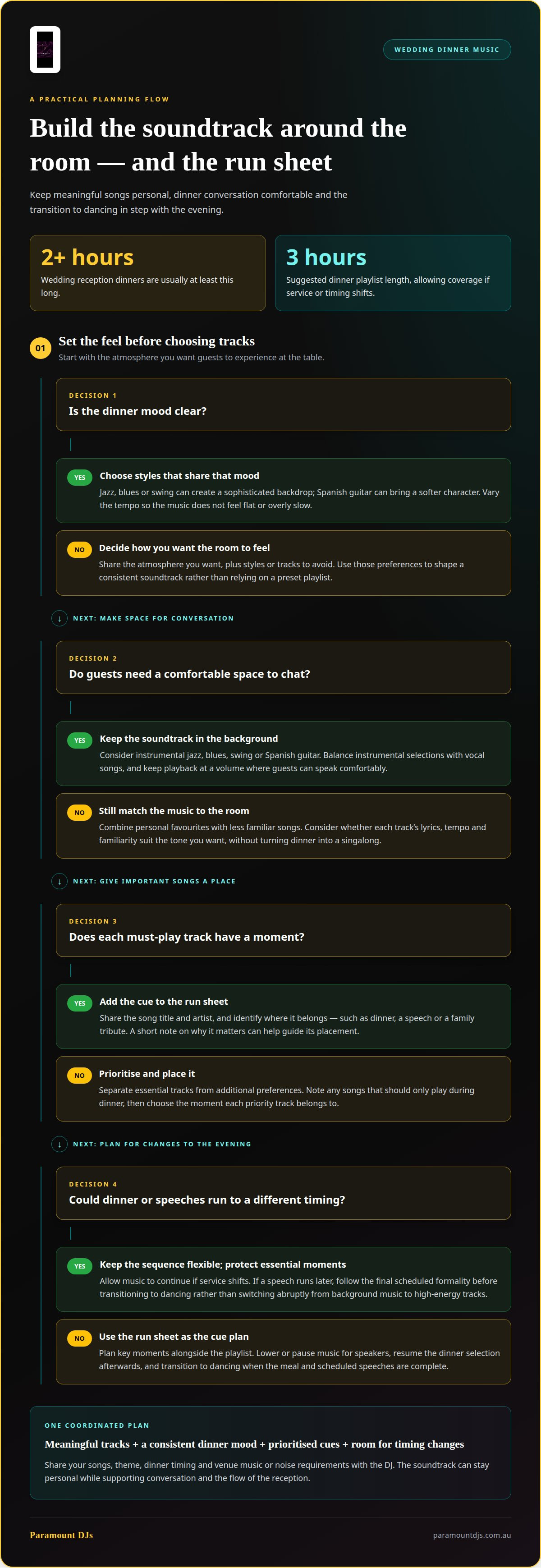
Playlist length should reflect the meal and the reception schedule. Wedding reception dinners are usually at least two hours long, while a suggested dinner playlist lasts three hours. That extra coverage allows music to continue through changes in service or timing. A DJ can plan a considered sequence with room for the meal to run longer, rather than letting a short playlist end while guests are still dining.
Share your must-hear tracks, meaningful albums, theme and dinner timing together. The DJ can spread personal songs across the playlist, balancing recognisable moments with a consistent sound. This connects the music to your story while keeping it suited to dinner.
Choosing wedding dinner music to suit the atmosphere with a professional DJ
Start with the feeling you want guests to experience at the table. Jazz, blues and swing can create a sophisticated backdrop without dominating conversation, while Spanish guitar can lend dinner a softer character. A professional DJ can combine styles that share a mood, then vary the tempo so the soundtrack doesn’t feel flat or overly slow. The music to play during wedding dinner should support the room, not compete with it.
For a warm, familiar sound, a DJ might weave in tracks such as Jack Johnson’s “Better Together” or Jason Mraz’s “I’m Yours”. These are examples, not a fixed Australian wedding chart: the right choices depend on your taste, guests and atmosphere. A mix of recognisable favourites and less familiar songs can keep the soundtrack personal without turning dinner into a singalong. Consider whether the lyrics, tempo and familiarity suit the tone you want.
Australian venues can have their own music permissions and noise requirements, so conditions may differ between receptions. A DJ can coordinate with the venue about its requirements and plan the dinner sound accordingly. Volume should let guests speak comfortably; the DJ can adjust playback to suit the room and the changing sound of dinner.
For instrumental options, consider jazz, blues or swing arrangements, or Spanish guitar pieces. These styles add musical texture without prominent lyrics competing with conversation. A DJ can balance instrumental selections with vocal songs, keeping the sound cohesive while giving guests space to talk. Instrumental tracks can also create a gentle atmosphere during quieter moments of the wedding dinner.
Share the atmosphere you want, along with styles or tracks to avoid. The DJ can use those preferences to shape the playlist and adapt its volume to the room, rather than relying on one preset level. If you want help to curate a dinner soundtrack that suits your celebration, include the venue’s music and noise requirements in the planning conversation.
How a professional DJ coordinates must-play songs with the couple's schedule
A must-play track needs a place in the reception, not just a spot on a list. The DJ can use your run sheet to align selected songs with dinner, speeches and the move to dancing. Share each track’s title and artist, then identify the moment it belongs to. For example, a song linked to a family tribute may suit a specific point in the evening better than background play.
Prioritising tracks helps protect the songs that matter most if the schedule changes. Separate essential tracks from additional preferences, and note any that should only play during dinner. The DJ can include priority selections in the music plan and arrange them around meal service and formalities. A short note explaining why a song matters can also help guide its placement.
A professional DJ can transition from dinner music to dancing after the meal and scheduled speeches are complete, using the run sheet as a cue. If reception timing shifts, the DJ can adjust the sequence rather than abruptly switching from quiet background music to high-energy tracks.
Plan key cues alongside the playlist. If speeches follow the main course, the DJ can lower or pause the music for each speaker, then resume the dinner selection afterwards. If a must-play song needs a clear introduction, the DJ can place it at a planned moment instead of letting it pass unnoticed among background tracks.
Build in flexibility. Dinner service, speeches and guest movement can affect the timing, so the DJ should treat the schedule as a guide while protecting essential moments. If a speech runs later, for instance, the transition to dancing can follow the final scheduled formality. A clear run sheet, prioritised song choices and agreed cues give the DJ practical direction without making the evening feel rigid.
4. Should wedding dinner music be live or recorded?
Recorded music suits couples who want familiar versions of specific songs and direct control over the playlist. A professional DJ can arrange tracks around dinner service, pause for speeches, then shift the mood when formalities finish. A carefully sequenced set can move from gentle background selections to more upbeat music without requiring a live band to change sets.
Live music creates a different kind of presence. A band or musician performs in the room, adding a visual focal point and the energy of a live performance. Couples with room in their budget can consider a live band to excite guests and maintain energy. This can suit a reception where musical performance is part of the dinner experience, rather than simply a backdrop.
Think about the role music should play at your tables. If guests need space to talk and you want particular recordings, recorded selections give the DJ direct control over track choice and order. If you want the performance itself to draw attention, live musicians can make music a more prominent feature of the evening.
The schedule matters, too. Recorded tracks can be paused or lowered for a speech, then resumed at a planned cue. Live performers can coordinate their sets around the same formalities, with breaks arranged to fit the reception flow. Either format works best when the music plan accounts for speeches, meal service and the transition to dancing.
Choose based on atmosphere, song preferences and how central you want performance to feel. You can also discuss a recorded dinner soundtrack with a professional wedding DJ, who can align the selections with your schedule and planned transition into dancing.
Frank Sinatra released “The Best Is Yet To Come” on It Might As Well Be Swing in 1959. Mix popular and lesser-known songs, vary tempos, keep streaming tracks offline, and confirm must-hears with your DJ.
Paramount DJs: Wedding DJs
Paramount DJs provides Wedding DJs to shape a dinner soundtrack around your musical preferences, reception atmosphere and schedule. It’s a natural next step if you want a professional to bring personal song choices together and coordinate the transition from dinner to dancing. Share your favourite tracks, must-play moments and the mood you want for the evening to guide the music plan.
For a more prominent live element, DJ & Sax duos add a live performance alongside DJ music. If you’re also planning guest entertainment, photo booth hire can complement the celebration. Choose the option that best suits your wedding, then discuss how it fits the schedule.
Contact Paramount DJs to discuss wedding music for your celebration.
Shape a soundtrack that feels like your celebration
As you refine your wedding plans, think about the feeling you want guests to carry from dinner into the rest of the evening. A clear musical direction can make the celebration feel considered and distinctly yours. The music to play during your wedding dinner should support that atmosphere while leaving room for conversation and the moments unfolding around the table.
Before discussing your plans with a DJ, settle on a few words that describe the mood you want, such as relaxed, elegant or joyful. These give your DJ a useful creative starting point, especially when your favourite songs span different eras or styles. Share which moments matter most, too, so the soundtrack feels connected to the occasion rather than simply filling the room.
Ready to explore the right musical direction for your wedding? Contact Paramount DJs about your wedding and take the next step towards a celebration that feels personal from the first song.
Frequently Asked Questions
What music suits a wedding dinner?
Music that supports conversation suits a wedding dinner best. A professional DJ can balance familiar songs with less predictable selections, keeping the soundtrack engaging without making every track a singalong. Consider your guests when choosing lyrics and intensity: clean versions and steady arrangements can feel more comfortable for a mixed-age table. Save explicit or heavier tracks for later, and avoid placing several slow songs back to back.
How does a professional DJ determine the right length for a wedding dinner playlist?
A professional DJ plans playlist coverage around the dinner window in your reception schedule. They account for when guests sit down, when service is expected to end, and pauses for speeches or other formalities. If several speeches follow the meal, for example, the DJ can plan enough music to cover dining and transitions, with room to adapt if service takes longer than expected.
How can a professional DJ choose dinner music that suits your guests?
A professional DJ can use your preferences and guest mix to guide the selection. Share family favourites, cultural or generational touchstones, and songs you’d rather avoid. If children and older relatives will be present, the DJ can keep dinner choices broadly suitable, then reserve more adult or high-energy tracks for later. A short do-not-play list helps prevent unwanted requests from disrupting the atmosphere.


