

What if the music could feel polished during dinner, then lift the room when it’s time to dance? A saxophonist and dj duo for hire brings together a DJ’s flexible soundtrack and the character of live performance, creating a coordinated experience rather than two acts simply sharing a space.
A live saxophone can suit a range of event styles, but it works best when you plan how it fits the occasion. The saxophonist adds a distinctive live element, while the DJ adapts the music as the event moves from arrival and dining to dancing.
This guide will help you decide whether a DJ and sax pairing suits your wedding, corporate function or private celebration, and how it compares with DJ-only entertainment. You’ll also find practical ways to brief your entertainment team, including what to share about your schedule, preferred atmosphere and key moments. With managed entertainment shaped around the event, the aim is a memorable experience that feels considered and runs smoothly.
Key Takeaways
- Match live saxophone moments to the mood and key transitions in your event schedule.
- Compare DJ-only entertainment with a saxophone and DJ by considering your event goals, atmosphere and guest experience.
- When looking for a saxophonist and dj duo for hire, prepare a clear brief covering your event type, timing and preferred atmosphere.
- Plan how the music should flow around speeches, dining and dancing so each part of the event feels considered.
- Discover how professionally managed DJ and live entertainment can suit weddings, corporate events and private parties.
Why hire a saxophonist and DJ duo for your event?
A DJ and saxophone duo combines recorded music with live performance. The DJ selects and mixes tracks to suit the event, while the saxophonist adds melody, movement and a visible focal point at selected moments. This gives you more variety than a playlist alone without relying on live musicians for every song. It can work well when you want the music to move between relaxed listening and a lively dance floor.
A DJ and saxophone duo pairs a DJ’s recorded music with the immediacy of a live saxophone performance. The DJ manages the music flow, drawing on the broad role of a Disc jockey, while the saxophonist brings a human, visual element to the sound. To make the pairing feel right for your event, decide which moments should feel refined, celebratory or high-energy, then identify where live performance will add the most.
The saxophone doesn’t need to feature throughout the event to make an impression. A live set during a reception can add character, while recorded tracks maintain continuity before and afterwards. This balance suits hosts who want a distinctive performance but still need the range and adaptability of DJ-led music.
What does a DJ and saxophone duo do?
The DJ provides the musical foundation, selecting and mixing recorded tracks to suit the mood and pace. The saxophonist performs alongside the music, adding a live layer and a focal point for guests. Together, they can make the entertainment feel cohesive rather than like separate acts taking turns. Your event brief sets the direction, including the atmosphere you want and the moments where a live feature fits best.
Which events can suit live saxophone with a DJ?
The format can suit different occasions, but the reason for choosing it will vary. Consider what guests will be doing and what you want the music to contribute:
- Weddings: A live saxophone feature can add a personal flourish to a reception, while the DJ supports the wider celebration with music suited to each stage of the day.
- Corporate events: If the function moves from conversation to celebration, plan live performance around the schedule and use DJ music to support the changing atmosphere.
- Private parties: A live feature can bring extra visual energy to a milestone or celebration while the DJ keeps the music adaptable for a varied group of guests.
This pairing is a strong fit when you want both recorded music and live performance, rather than one musical texture throughout. If you want a visible performer alongside a flexible soundtrack, a saxophonist and dj duo for hire may suit your brief. If continuous DJ-led music is the priority, a DJ-only option may be more direct. Choose according to the atmosphere you want and how a live element will support it.
For a broader look at why this combination is attracting attention in event entertainment, explore the DJ and sax event entertainment trend guide.
How a saxophonist and DJ can shape the event’s music flow
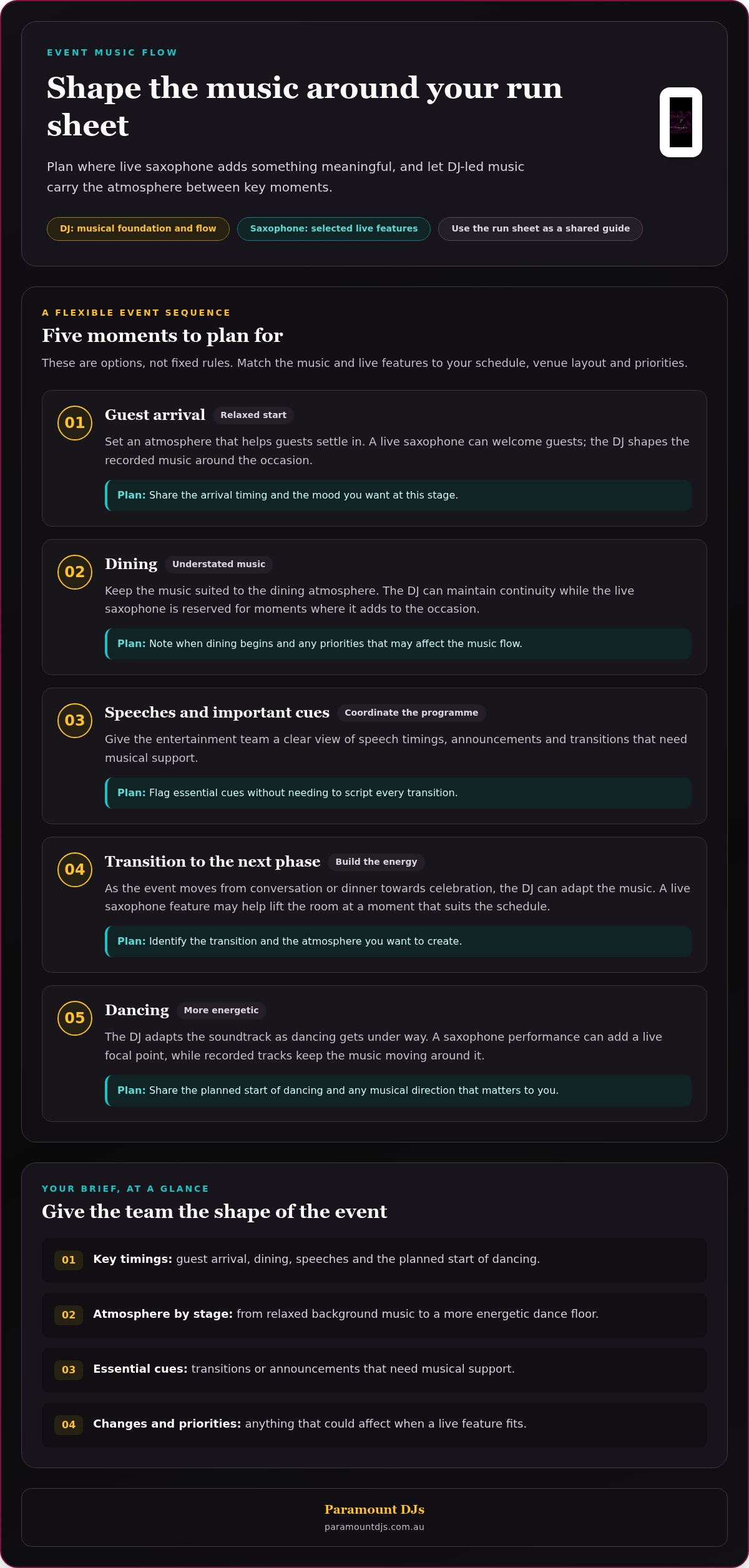
Live saxophone works best when it has a clear place in the programme. Map possible performance moments against your run sheet instead of leaving them to fit in on the day. The DJ can maintain a musical thread around those features, helping the atmosphere shift from guest arrival to dining, speeches and dancing without abrupt changes in energy.
A run sheet helps align music with event moments, so live saxophone feels like part of the occasion rather than an interruption. It doesn’t need to specify every track. It should give the entertainment team a shared view of the schedule, important transitions and cues that matter to you.
Which moments could feature live saxophone?
Think about where live performance would add something meaningful. It could welcome guests as they arrive, lift the energy as a reception moves into its next phase, or create a focal point once dancing is under way. The right timing depends on your event format, venue layout and priorities.
For example, a wedding organiser might keep the music understated while guests settle in, then build towards a livelier reception. A corporate function could favour a measured mood during networking before opening up the dance floor. At a private celebration, a live feature might mark the transition from dinner to dancing. These are options, not fixed rules. Choose moments that fit your schedule and the experience you want to create.
How should music preferences and the run sheet work together?
Share the practical shape of the event as well as your musical direction. A useful brief can include:
- Key timings, such as guest arrival, dining, speeches and the planned start of dancing.
- The atmosphere you want at each stage, from relaxed background music to a more energetic dance floor.
- Essential musical cues, including transitions or announcements that need musical support.
- Schedule changes or priorities that could affect when a live feature fits.
Specific guidance helps coordinate the performance with the rest of the programme. You don’t need to script every transition. A clear sense of what matters gives the DJ and saxophonist room to support the occasion while keeping the music aligned with your plans. For wedding-specific ideas on shaping reception music, explore this wedding reception DJ hire guide.
If you’re planning a saxophonist and dj duo for hire, Paramount DJs provides managed DJ and live entertainment tailored to events. Explore DJ and sax entertainment as you shape the music flow around your schedule.
DJ and saxophone duo vs DJ-only entertainment: how to choose
Both formats can create a memorable event. The main difference is whether you want the music led by a DJ alone or accompanied by a visible live performer. Consider the programme, venue setting and guest experience you’re aiming for. Add live music because it supports those priorities, not simply for novelty.
| Consideration | DJ-only entertainment | DJ and saxophone duo |
|---|---|---|
| Live presence | The DJ is the central performance presence. | A saxophonist adds a live, visible element alongside the DJ. |
| Musical flexibility | Recorded music can carry the event’s soundtrack across different moods and moments. | The DJ maintains the recorded soundtrack, with saxophone features adding live expression at selected moments. |
| Event atmosphere | A good fit when you want a DJ-led music experience without an additional live feature. | Can bring extra energy or a distinctive focal point where live performance suits the occasion. |
Live saxophone doesn’t have to feel out of place. Match its role to the event’s tone and schedule. A considered feature can complement a polished reception or build excitement at a celebration. A prominent performance during a quiet or formal moment may be less suitable. Planning the timing helps the live element feel intentional and connected to the wider experience.
When might DJ-only entertainment be the better fit?
DJ-only entertainment may suit an event where you want the DJ to shape the full musical experience, or where the programme leaves little room for live features. Think about whether guests will mainly be talking, moving between activities or dancing, and how the venue setting supports your preferred atmosphere. A straightforward, DJ-led approach can be the right choice.
When can adding a live saxophonist make sense?
A saxophonist can be a good fit when a visible live element supports the event’s style and there’s a natural place for performance in the schedule. Consider whether guests can engage with the feature without interrupting speeches, dining or other key activities. If the timing works, the combination adds a different musical texture while the DJ keeps the music moving. Explore the benefits of mixing live music with professional DJs for more context.
When choosing a saxophonist and dj duo for hire, start with what you want guests to feel and which moments matter most. That gives your entertainment brief a clear direction and helps you choose a format that feels distinctive and well integrated with the event.
What to plan before booking a saxophonist and DJ
A clear brief turns your entertainment choice into a practical plan. Start with the purpose of the event, then outline the atmosphere you want and where live saxophone might fit. A wedding reception, corporate function and private celebration each have a different rhythm, so let the event type and programme guide the details you share.
Use this preparation sequence to shape your brief:
- Set the event goal. Note what the music should contribute, such as a welcoming feel, a lively dance floor or a polished backdrop for a celebration.
- Outline the format and timing. Share the event date, approximate timings and main stages of the programme.
- Identify priority moments. Include key announcements, transitions and points where you’d like live performance to support the mood.
- Describe your music preferences. Give a sense of the styles and atmosphere you enjoy, along with any essential cues.
- Gather venue details. Include relevant information about access, the planned performance area and sound considerations for event planning.
This sequence gives the entertainment team useful context without turning the brief into a rigid script. If the schedule changes, share an updated run sheet so the music can stay aligned with the event as it unfolds.
What details belong in your entertainment brief?
Be specific about the event date, format and approximate timings, then describe how you want each stage to feel. For example, distinguish a relaxed arrival from a more energetic celebration later on. Add important musical cues, announcements and transitions, along with relevant venue information. If the run sheet changes, pass on the latest version so the entertainment plan reflects the current programme.
How can you keep the event-day setup organised?
Choose one event contact to communicate schedule updates and coordinate timing with the entertainment team. Consider the performance area and access arrangements alongside the wider venue plan, including guest movement and the programme. If timings shift, send a clear update to the relevant people. A shared, current schedule helps everyone work from the same plan.
Thoughtful preparation makes booking a saxophonist and dj duo for hire more manageable. You don’t need every detail finalised in advance. A clear brief, practical venue information and a named event contact create a strong foundation for a coordinated experience. Let the entertainment plan reflect your priorities while fitting the occasion.
For professionally managed DJ and live entertainment shaped around your event, plan managed DJ and live entertainment with Paramount DJs.
Book a saxophonist and DJ duo with Paramount DJs
Paramount DJs provides professionally managed DJ and live entertainment, including DJ and sax performances, for weddings, corporate events and private parties. The aim is a coordinated experience shaped around your occasion, rather than separate entertainment elements planned in isolation.
Start with the event details and what you want the music to contribute. Then discuss how DJ and sax entertainment can fit your programme. You don’t need a finished run sheet to begin. An outline of the schedule and your key priorities gives the conversation a useful direction.
How to make your enquiry clear and useful
Give a concise picture of the occasion and the atmosphere you’re hoping to create. Include practical information alongside your creative preferences, so the entertainment can be considered in the context of the whole event.
- Event basics: Share the event type, date and venue details.
- Schedule: Include expected timings and key transitions in the programme.
- Atmosphere: Describe the mood you’re aiming for, such as elegant, relaxed or high-energy.
- Live moments: Identify where saxophone performance matters most to the experience.
- Planning context: Mention relevant venue arrangements, announcements or programme details that may affect timing.
These details keep the discussion focused on your event rather than a generic entertainment plan. If timings are still developing, share what you know and provide updates as the programme takes shape.
What to expect from managed event entertainment
A managed DJ and live entertainment arrangement brings the DJ and saxophone performance together as one coordinated part of your event planning. Clear communication about your priorities, schedule and preferred atmosphere helps shape how the music supports the occasion. It also keeps important transitions in view as plans develop. The result is an experience planned around your event, whether you’re organising a wedding, corporate function or private celebration.
Ready to take the next step? Share your event details and priorities with Paramount DJs, then discuss how DJ and sax entertainment can suit your plans. Enquire about DJ and sax entertainment.
Give your event its own musical signature
Memorable entertainment often starts with a clear point of view. Before choosing a saxophonist and dj duo for hire, think about the feeling you want guests to take away: celebration, connection or a night that builds in energy. That intention can guide how the music connects with the occasion, making the live element feel personal rather than simply impressive.
You don’t need to plan every song to create that effect. Start with one defining moment or mood, then use it to guide the conversation about how DJ and saxophone entertainment could fit your event. A clear creative direction gives the experience room to feel polished and distinctive while still reflecting you and your guests.
Paramount DJs provides managed DJ and sax entertainment for events across Australia. Enquire about managed DJ and sax entertainment and take the next step towards a soundtrack that feels right for your occasion.
Frequently Asked Questions
Can a saxophonist and DJ duo perform at an outdoor event?
Yes, an outdoor celebration can suit a DJ and saxophone performance when the setting is included in the planning. Share whether the performance area is exposed, how guests will move between spaces and whether the schedule may shift. A garden reception with guests moving between a lawn and dining area, for example, has different planning considerations from an event taking place in one fixed outdoor space.
How much space does a saxophonist and DJ need?
The space required depends on the room layout, performance arrangement and how guests will use the area. Consider where the DJ will be positioned, how the saxophonist can move and whether guests need clear access through the space. A floor plan can help. If you don’t have one, describe the room and planned guest layout to provide useful context without relying on assumed measurements.
Can we request songs for the DJ and saxophonist?
Yes, share preferred music, essential songs and any tracks that don’t suit your event as part of your brief. You can also explain where a particular mood matters, such as welcoming guests or building energy before dancing. A song request doesn’t automatically mean the saxophonist will perform that song live, so distinguish between general music preferences and specific moments where you’d like the live instrument to feature.
Does the saxophonist play continuously throughout the event?
No, saxophone performance doesn’t need to be continuous. A saxophonist and dj duo for hire can be planned around selected moments, with the DJ supporting the wider musical experience between them. The arrangement should follow your event programme and priorities rather than an assumed set pattern. Share the timings that matter so the live performance can be planned in context.
Is a saxophonist and DJ duo suitable for a corporate event?
Yes, it can suit a corporate function when the live performance complements the occasion’s purpose and tone. A relaxed networking event may call for a different musical approach from a company celebration with dancing. Consider the audience, programme and role of the entertainment, then include those points in your brief. This helps shape an experience that feels appropriate for colleagues and guests.
How far in advance should I book a saxophonist and DJ?
Start planning once your event date and entertainment priorities are taking shape. This gives you time to consider how the music will fit the venue, schedule and important moments, without relying on a universal booking deadline. Demand and event needs vary. Before enquiring, gather the date, event format, approximate timings and key musical cues to make the initial conversation more focused.


