

What if the saxophonist came to the guests, rather than asking everyone to gather around a stage? A roaming saxophonist and dj performance combines a DJ’s continuous music with live saxophone among the crowd, creating lively moments without making the whole event feel like a concert.
It’s natural to wonder what “roaming” looks like in practice, or whether a live instrument might compete with conversation. The key is timing and placement. When the saxophonist joins the DJ at moments that suit the occasion, the performance can lift the energy while leaving room for guests to mingle, dine or dance.
This guide explains what guests can expect, how a roaming act differs from a stage-based performance, and where it could fit into your event’s running order. You’ll also find practical planning points to share when arranging a managed DJ and live-music experience, so the atmosphere can shift naturally from relaxed arrivals to a busier dance floor.
Key Takeaways
- A roaming saxophonist moves through suitable event spaces for live moments, rather than playing continuously or staying on a stage.
- A roaming saxophonist and dj performance can add a visible live layer to DJ tracks, with the atmosphere shaped around your event.
- Compare roaming, fixed-position sax and DJ-only entertainment to choose the right balance of guest interaction and practical planning.
- Set the experience up for success by sharing your preferred genres, key moments, quieter periods and run sheet.
- Professionally managed DJ and sax entertainment brings the live performer and DJ together as one coordinated experience.
What is a roaming saxophonist and DJ performance?
A roaming saxophonist and DJ performance pairs a DJ mixing recorded tracks with a saxophonist playing live among guests. Instead of remaining in one fixed position, the saxophonist can move through suitable event spaces, bringing the live performance closer to different areas of the room.
The two performers contribute different textures to the same musical experience. The DJ provides a continuous musical foundation, while the saxophone adds live melodies and solos that guests can see and hear as they happen. Depending on the event, the saxophonist might play near the dance floor, move through an open guest area or perform beside the DJ for a section. Roaming describes the option to move through appropriate spaces, not an expectation to play without a break.
That distinction helps set expectations. Guests might notice the saxophonist join the music at a particular moment, then move to another suitable area or pause while the DJ continues. The live element can feel interactive without turning every part of the event into a show.
What does the saxophonist do during a roaming set?
The saxophonist plays live over suitable DJ tracks, adding melodic phrases and solos that respond to the music. A roaming performer can move among guest areas rather than playing only from a stage or beside the DJ. This can bring the music closer to different parts of the room and give guests a changing view of the performance.
Interaction can be as simple as playing nearby while guests dance or socialise. Guests aren’t expected to join in, dance or respond in a particular way. They can enjoy the performance at their own comfort level, while people who prefer to chat can carry on without being singled out.
Movement depends on the event space. Clear pathways and open areas make it easier for the performer to move comfortably. Tight or crowded areas may suit a stationary performance instead. Roaming doesn’t mean weaving through every table or entering every room, so include the layout and guest flow in your planning.
What does the DJ contribute to the performance?
The DJ selects and mixes tracks, creating the musical framework for the saxophonist and maintaining the flow between live moments. The role involves more than playing a playlist: a DJ blends selections and manages transitions to suit the event. For a useful overview of the history and role of a Disc Jockey, see the background on the craft and its development.
When the saxophonist pauses or moves between areas, the DJ keeps the music going. That continuity connects the live moments rather than leaving gaps between separate performances. The saxophone can join tracks where its sound fits, then step back while the DJ carries the atmosphere forward.
The music can be shaped around the occasion and your preferences, from the genres you enjoy to the energy you want at different points. Share those priorities to give the DJ and saxophonist a useful guide, while leaving room to respond naturally to the event as it unfolds.
How does a roaming DJ and sax performance build the event atmosphere?
The atmosphere doesn’t have to switch from quiet to full dance floor all at once. A DJ and saxophonist can help create a gradual change, with the music responding to the event. During drinks or mingling, the DJ might provide a relaxed soundtrack. Later, a live saxophone feature over a familiar track can bring fresh energy to the room. The event plan and your preferences guide the direction, rather than a fixed sequence.
The DJ creates musical continuity; the saxophone adds a live, visible moment guests can connect with. Familiar tracks give the room a musical base, while live playing adds personality and a point of focus. The saxophone’s sound and versatility across styles are explored in Yamaha’s guide to the saxophone instrument.
A roaming saxophonist and dj performance can highlight a particular moment without making the instrument the focus of the entire event. For example, the saxophonist might join in as guests move towards the dance floor, then step back while the DJ carries on. This creates contrast and energy without crowding the occasion with constant performance.
When can roaming saxophone suit an event?
Drinks, mingling and dancing can each offer a natural opportunity, depending on the running order and the mood you want. A relaxed gathering may call for a lighter touch, with the saxophonist appearing briefly among guests. A celebration centred on dancing may suit a more energetic live moment. You don’t need to include both styles. Let the occasion and your priorities shape the timing and musical direction.
How does live saxophone engage guests without taking over?
Interaction works best as an invitation, not an expectation. Guests can enjoy the performance, dance or keep talking. Choose a suitable spot so the live sound reaches the intended area without placing the performer in the middle of a conversation or obstructing the venue’s flow. Discuss the layout and quieter periods as part of the event plan.
Selective appearances also create contrast. A live feature can stand out because it isn’t happening constantly, while the DJ maintains the broader musical flow. Consider where guests will gather and what’s happening at that point in the schedule. Place the performance where it adds to the moment rather than competing with speeches, dining or conversation.
For a seamless feel, share the atmosphere you’re aiming for and any moments when the music should stay understated. Paramount DJs brings professional DJ and live performance together as managed event entertainment. Explore a coordinated DJ and sax experience shaped around your occasion.
Roaming saxophonist, stage-based act or DJ-only: which format fits?
No single format suits every event. Your choice depends on how guests will use the space, how much live interaction you want and whether the music should be a feature or a continuous backdrop. A roaming saxophonist and dj performance brings live music closer to guests. A fixed-position sax act centres attention in one area, while DJ-only entertainment keeps the focus on the DJ’s soundtrack.
Use this comparison to match the format to your priorities:
| Format | Guest interaction | Atmosphere | Planning considerations |
|---|---|---|---|
| Roaming sax plus DJ | The saxophonist can move through suitable guest areas, creating opportunities for close-up interaction without requiring participation. | Can add a live, changing feature to the DJ-led sound. | Consider open pathways, access between areas and how movement fits the event flow. |
| Fixed-position sax plus DJ | Guests can watch or listen from around a defined performance area. | Creates a more focused live feature while the DJ provides the musical framework. | Choose a position with suitable space and sightlines that won’t obstruct key activities. |
| DJ-only | Interaction centres on the DJ and the shared dance-floor or listening experience. | Keeps the emphasis on a continuous DJ soundtrack without a live instrumental feature. | Plan around the event’s preferred genres, energy and schedule. |
Think about the room as well as the music. If guests will circulate between spaces, roaming may help connect different parts of the event. If they’ll gather around one focal area, a fixed position may be more practical. In either case, a considered layout helps the entertainment feel natural.
When is roaming sax a better fit than a fixed performance?
Roaming can suit an event where guests move between open areas and you want the live performance to feel close to them. A fixed position may work better when guests are gathered in one place and a clear focal point matters more than movement. Access, sightlines and the running order help determine where the saxophonist can play without disrupting the event.
When might DJ-only entertainment better match the brief?
DJ-only entertainment may fit if your priority is a DJ-led atmosphere and continuous soundtrack. Adding saxophone changes the character of the performance by introducing a visible live feature, not simply another musical selection. Consider whether you want guests to notice and engage with a live musician, or prefer the DJ to remain the sole performance focus.
Start with your priorities: guest movement, focal points and the role you want live music to play. Match those details to the layout and desired energy to choose a format that feels purposeful, rather than adding entertainment without a clear role.
How to plan a roaming saxophonist and DJ performance
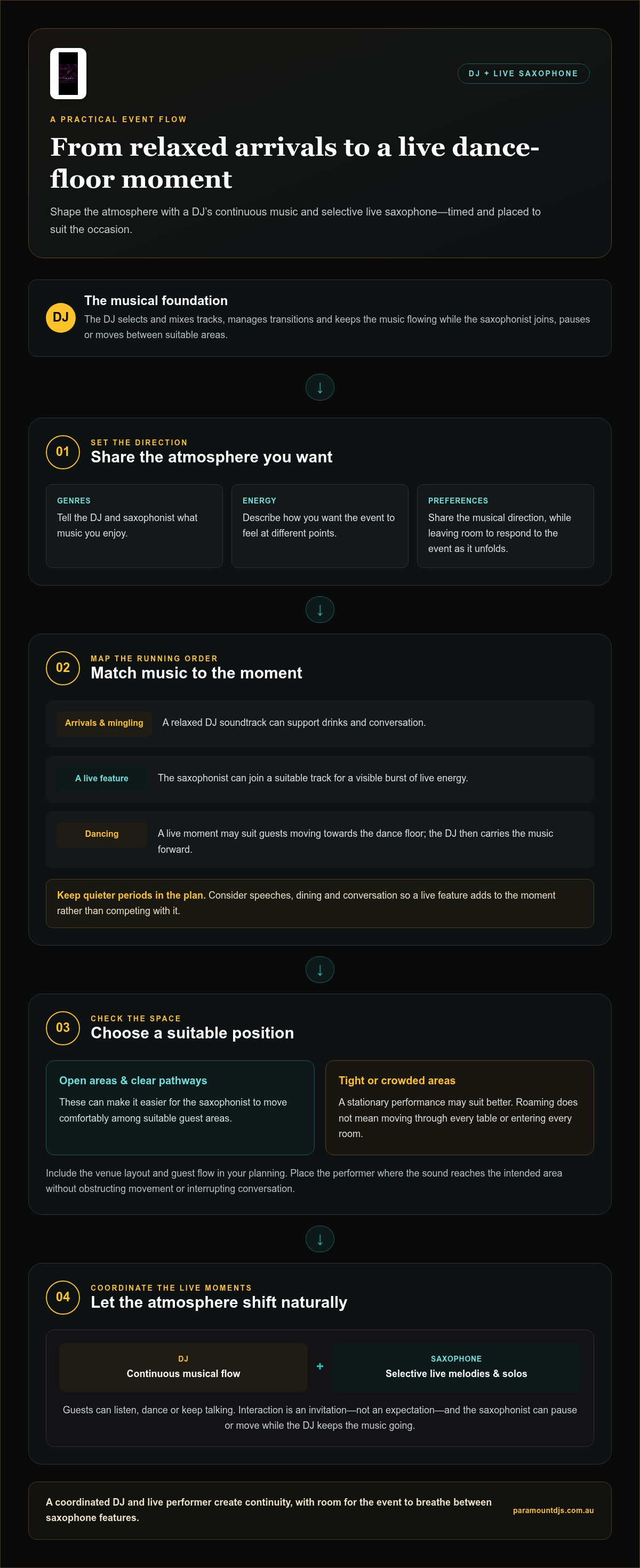
A seamless performance starts with a clear picture of the occasion, not a rigid set plan. Give the DJ and saxophonist enough context to shape the music, identify suitable live moments and coordinate movement through the venue. A concise brief helps balance atmosphere, practical details and the event schedule.
The core planning inputs are event format, schedule, atmosphere and music preferences. Work through them in order:
- Define the mood. Describe how you want the event to feel, whether relaxed and conversational, upbeat and social, or centred on dancing. Explain whether that mood is likely to change as the event unfolds.
- Share your music preferences. Name preferred genres, artists or tracks, along with styles you’d rather avoid. This gives the DJ direction for the soundtrack and helps the saxophonist’s live contributions sit comfortably within it.
- Mark possible feature moments. Identify points in the schedule where live saxophone could add impact, such as a shift towards dancing or a period when guests are mingling. Treat these as useful cues, not a demand for a fixed performance sequence.
- Describe the venue layout. Explain where guests will gather, how they’ll move between areas and which spaces may suit live performance. Include relevant access details and any venue requirements that affect movement or performance areas.
- Share the run sheet. Provide event timings, formalities, announcements and quieter periods. This gives the entertainment team a clear view of the flow and helps coordinate performance moments with the broader schedule.
What details should you include in the event brief?
Include the event type, an approximate schedule, a description of the venue layout and the atmosphere you’re aiming for. Note key moments where live saxophone may suit, preferred genres and important cues or announcements. If a speech or formal item needs a quieter setting, mark that too. A concise brief guides the music without locking the performance into a fixed sequence.
How can the performance fit smoothly into the run sheet?
Look for transitions between mingling, formalities and dancing, then flag where the entertainment may need to adjust its energy or pause. Share timing changes as they arise so the team can coordinate with the schedule. Plan movement routes and suitable performance areas with guest flow in mind, avoiding busy paths or areas needed for event activities.
Good planning leaves room for the event to unfold naturally while giving the performers clear direction. To plan a managed DJ and sax performance around your event’s atmosphere and running order, share your priorities and schedule with Paramount DJs.
What to expect from Paramount DJs’ managed DJ and sax entertainment
Paramount DJs brings a professional DJ and live saxophonist together as one managed entertainment experience. The DJ provides recorded music and mixing, while the saxophonist adds live performance. The focus is on coordinating the music and live moments with your event’s atmosphere and schedule, rather than arranging separate elements in isolation.
That coordination matters because entertainment needs to work alongside the occasion, not compete with it. A roaming saxophonist and dj performance can be shaped around your event, from a relaxed atmosphere to a livelier celebration. Share your priorities to guide the music, timing and moments you’d like to highlight.
How does managed entertainment help the event run smoothly?
Managed entertainment brings the DJ and live performer together around the event’s schedule. The team has context for formalities, transitions and moments when the atmosphere may need to change. Your music preferences and event plan help guide the performance, while the team responds to the occasion as it unfolds. Paramount DJs provides a coordinated service, not equipment-only dry hire.
This distinction is useful when planning the wider experience. You’re engaging professional DJs and live performers, rather than hiring equipment and organising the entertainment yourself. A shared understanding of the schedule helps the music sit naturally alongside the event, whether guests are arriving, mingling or ready to dance. The aim is a cohesive experience that suits the occasion.
What should you share when enquiring about DJ and sax?
Start with the essentials: your event type, date, venue and expected schedule. Then describe the atmosphere you’re hoping to create and the music you enjoy. Include any particular moments where live saxophone could add impact. These details help frame how DJ and sax entertainment can complement your event.
It’s also helpful to explain how guests will use the venue. They may mingle across different areas before gathering to dance, or remain around one central space. Sharing the layout and key transitions gives the team a clearer picture of how the entertainment can fit into the occasion.
You don’t need every detail finalised before starting the conversation. A draft schedule, broad music preferences and a sense of the atmosphere you want are a useful foundation. From there, you can discuss how the DJ and sax performance can be coordinated with your plans, including the role you’d like live saxophone to play.
Ready to talk through your event format, atmosphere and entertainment vision? Discuss DJ and sax entertainment with Paramount DJs and share the details that will help shape a coordinated experience.
Shape the soundtrack around your event
The most memorable entertainment choices feel connected to the occasion. Picture how you’d like guests to feel at different moments, then use that vision to guide the music and performance style. A roaming saxophonist and dj performance can complement your event’s character without defining every moment.
You don’t need every detail finalised to take the next step. A date, venue and early outline of your plans are enough to start a useful conversation about the atmosphere you have in mind and how DJ and sax entertainment could support it.
Plan your DJ and sax performance with Paramount DJs and take the first step towards an event soundtrack that feels personal, polished and right for your celebration.
Frequently Asked Questions
How does a roaming saxophonist perform with a DJ?
The saxophonist plays live over selected DJ tracks, adding melodies or solos that complement the music. The DJ manages track selection and mixing, while the saxophonist contributes a live instrumental layer. Share genres and tracks you enjoy, as well as styles that don’t suit the occasion. This gives the performers useful musical direction without requiring you to plan every selection.
Is a roaming saxophonist suitable for a wedding reception?
Yes, a roaming saxophonist can suit a wedding reception if the performance style fits your venue, schedule and preferred atmosphere. Think about how the reception is arranged: guests may be seated for a meal, gathered for formalities or moving towards the dance floor. Flag these moments in your event plan so the live performance complements the celebration without competing with an important announcement or speech.
Can a roaming saxophonist perform during a drinks reception?
Yes, a drinks reception can be a suitable time for live saxophone, particularly if you want a musical feature while guests arrive and mingle. Consider where guests will gather and whether the layout leaves enough room for the performer to move comfortably. Share the timing and any planned speeches or announcements so the music fits around the occasion’s key moments.
Does a saxophonist play continuously during a DJ performance?
No, the saxophonist doesn’t need to play continuously. Live appearances can be planned around selected moments, while the DJ provides music between them. If you have a particular song or transition in mind, include it in the brief as a cue rather than assuming an exact performance sequence. This lets the entertainment fit the event while the DJ’s music continues during saxophone breaks.
What information should I provide when enquiring about DJ and sax entertainment?
Share your event type, date, venue and approximate schedule, along with the atmosphere you’d like to create. Preferred genres, songs to include or avoid, and important formalities are useful details too. If you have a floor plan or know where guests will gather, describe that as well. A clear starting brief helps frame how DJ and sax could suit your event.
Is roaming saxophone better than a DJ-only performance?
Neither option is automatically better; it depends on what you want the entertainment to do. Choose roaming sax with a DJ if you want a live musician performing in suitable guest areas. DJ-only entertainment may suit an event where the priority is the DJ-led soundtrack without a live instrumental feature. Consider your venue layout and the role you want music to play before deciding.


