

The soundtrack can do more than fill a pause. A thoughtful music selection for a professional conference reflects the event’s theme and messages, energises delegates between presentations and makes transitions feel intentional. The right choices suit the audience and setting without competing with speakers or conversation.
It’s easy to focus on the keynote and agenda, but the moments between sessions also shape the conference experience. Music can welcome delegates, lift the atmosphere during a break and create a consistent mood that supports the event’s ideas.
This guide explains how to choose music for different conference moments, connect it to your theme and key messages, and coordinate it with the programme. You’ll also find practical points for arranging professional entertainment, so the music feels purposeful, polished and right for your audience.
Key Takeaways
- Plan music around the programme so each transition helps restore energy without distracting from presentations or conversation.
- Connect musical style, mood and lyrics to the conference theme, keeping the event’s central messages in focus.
- Choose music that suits your audience, venue and event tone, rather than relying on a one-size-fits-all playlist.
- Shape the atmosphere across registration, breaks, meals and networking with purposeful changes in energy and volume.
Conference energising sessions between presentations
Plan music around the programme, not as a continuous backdrop. For Australian conferences, deliberate changes between sessions can refresh the room while keeping attention on speakers and conversations.
Music for registration, breaks and meals
For registration, choose welcoming music that establishes the event’s tone as participants arrive and find their seats. During a meal, gentler instrumental tracks can leave conversation easy to follow. A presentation break may suit a brighter shift, particularly after a detailed keynote. Consider the next agenda item, the room’s atmosphere and whether delegates need to talk, refocus or move between spaces.
Networking and presentation-break energy
Networking music should add momentum without becoming the main event. For a relaxed mixer, choose familiar, upbeat tracks at a level that leaves room for introductions. Between presentations, a brief, more energetic selection can signal a change of pace and help participants return ready to engage. Match the shift to the session ahead instead of relying on volume alone.
Build each transition into the running order. For example, move from a calm arrival playlist to brighter break music, then lower the energy before a speaker takes the stage. The Music in Me Summit illustrates how musical activities can vary: its workshops included storytelling through music, drum circles and musical games. These examples show different ways sound can invite participation, though a corporate programme may suit background music instead.
- After a technical presentation, use a lighter instrumental selection before the next speaker.
- For a networking break, choose recognisable tracks that support conversation rather than dominate it.
- Before a reflective session, reduce musical intensity to prepare the room for a more measured tone.
Share the session order and intended mood with the person managing the music. This gives each change a clear purpose and helps the soundtrack support the programme’s pace.
Selecting music to support conference themes and messages
Music can give a conference theme a sound delegates recognise throughout the event. A considered music selection for a professional conference supports the central message, suits the audience and fits the format without distracting from speakers.
Playlist, DJ and live music formats
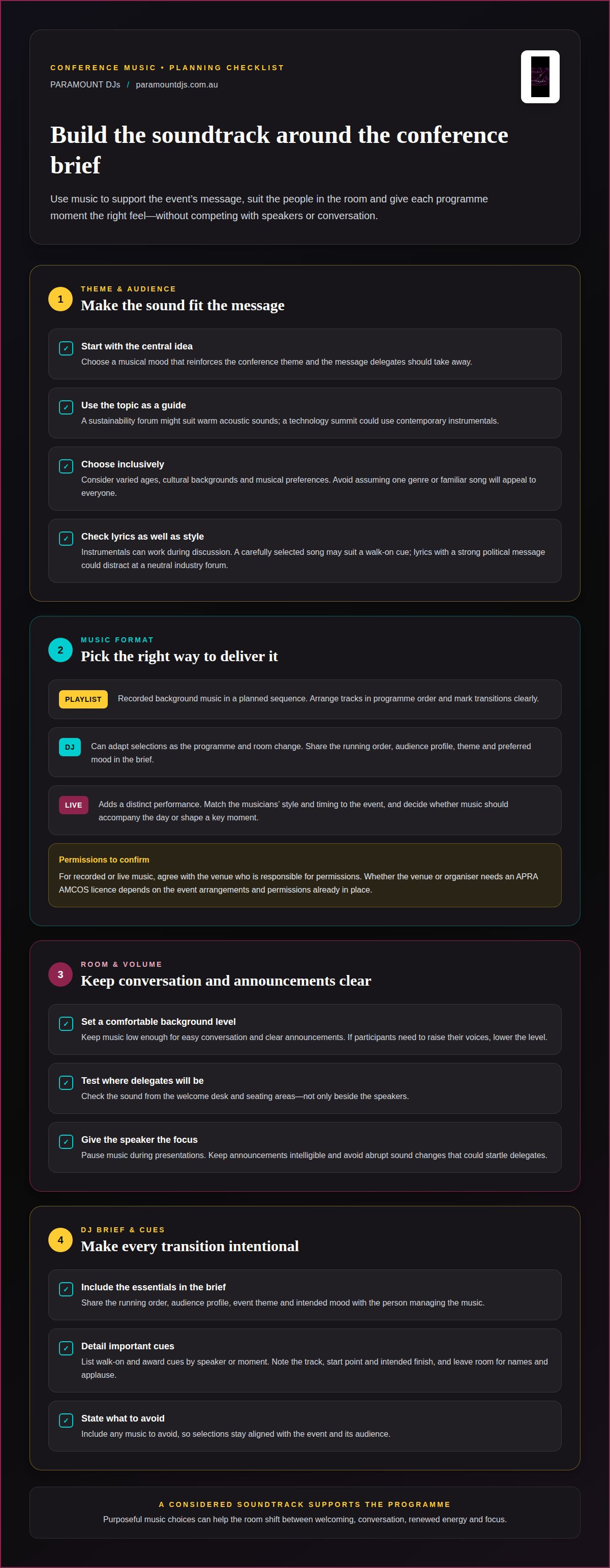
A prepared playlist provides recorded background music in a planned sequence, while a DJ can adapt selections as the programme and room change. Live musicians add a distinct performance, so their style and timing should suit the event. Choose according to whether music should accompany the day or shape key moments, such as a speaker’s entrance or an awards presentation.
For recorded or live music, agree with the venue who is responsible for permissions before the event. Whether the venue or organiser needs an APRA AMCOS licence depends on the event arrangements and the permissions already in place.
Theme and audience fit
Start with the conference’s core message, then match the music’s mood to it. A sustainability forum might suit warm acoustic sounds, while a technology summit could use contemporary instrumentals. For an audience spanning ages and cultures, choose accessible tracks rather than assuming one genre represents everyone. Music should reinforce the theme and respect the range of participants.
Review lyrics as well as musical style. Instrumental tracks can work well during discussion, while a carefully selected song may suit a walk-on cue.
Background music volume
Keep background music low enough for comfortable conversation and clear announcements. Test it from the welcome desk and seating areas, not only beside the speakers. If participants need to raise their voices, lower the level. Pause music during presentations to keep the speaker in focus.
Plan accessibility into your sound cues: keep announcements intelligible and avoid abrupt changes that could startle delegates.
DJ briefs and conference playlists
Include the running order, audience profile, theme and preferred mood in the DJ brief. List walk-on and award cues by speaker or moment, noting the track, start point and intended finish. Include any music to avoid, and explain how cues should leave room for names and applause.
For a playlist, arrange tracks in programme order and mark transitions clearly. Treat music selection for a professional conference as part of the event brief, not an afterthought.
What music suits a professional conference in Australia?
The right soundtrack reflects the event’s purpose, audience and setting. For a conference about innovation, clean instrumental tracks can suggest momentum; a leadership forum may call for measured, understated sounds. Start with the message delegates should take away, then choose music that supports it without turning the event into a performance.
Consider the sector and the room. A creative industries gathering may welcome a more expressive sound, while a finance or policy conference might call for restrained background music. In a compact meeting room, sparse arrangements can feel less intrusive. In a large exhibition space, fuller music may create atmosphere, provided conversation and announcements remain clear.
Australian audiences can bring varied ages, cultural backgrounds and musical preferences. Avoid relying on stereotypes or assuming that one familiar song will appeal to everyone. Instead, use broadly accessible selections and choose lyrics carefully. For example, a track with a strong political message could distract at a neutral industry forum, even if its sound suits the mood.
- Match the mood: Pair a forward-looking theme with bright, contemporary instrumentals.
- Consider the audience: Choose inclusive tracks that don’t depend on one generation’s references.
- Respect the setting: Use subtle arrangements during discussion-heavy sessions.
- Review lyrics: Check that words and tone align with the conference’s purpose.
Test your selections against the running order. A track suitable for an opening may feel too lively before a sensitive panel, while a quiet instrumental might lack impact for an awards moment. For a conference with delegates travelling from different regions, prioritise a coherent atmosphere over local in-jokes. This keeps the music connected to the event’s identity and welcoming to participants.
Its sixth round covers conferences taking place from 1 April - 30th June 2026, with applications opening Tuesday 20th January, 2026 and closing at 5pm AEDT on Thursday 19th February, 2026.
The program gives priority to applicants who have not previously received international conference funding. Jazzahead 2026 in Germany is listed as an event applicants may choose, offering an opportunity to connect with the wider music industry.
How should conference music vary between registration, breaks, meals and networking?
Give each point in the programme its own musical role. A simple cue plan can make registration feel welcoming, keep meal periods conversational, lift the energy during breaks and make networking feel inviting.
At registration, use warm, unobtrusive tracks as delegates arrive, collect badges and find the right room. For a conference opening with a welcome address, for example, begin with music that gradually settles before the host speaks. This creates a clear transition from arrival activity to the formal programme.
- Registration: Choose a welcoming mood that allows check-in instructions and conversations to remain clear.
- Breaks: Introduce brighter, more rhythmic tracks to mark a change from presentation mode.
- Meals: Keep arrangements gentle and familiar, so table conversations remain central.
- Networking: Use a relaxed, upbeat selection that gives the room momentum without overpowering introductions.
After a detailed keynote, a noticeable but measured shift at morning tea can signal a mental reset. Keep the change intentional: moving abruptly from quiet piano to high-energy dance music may feel disconnected from the session. Use the programme’s tone and the next speaker’s subject to guide each cue.
During lunch, consider the room layout as well as the menu. A large space with scattered tables may need a more even musical presence than a small dining room. Before delegates enter, listen from different seating areas and adjust the level to keep conversation clear. For networking, choose tracks with a steady pulse and avoid prominent lyrics during introductions.
Share the running order, cue points and desired mood with the person managing the music. Include the host’s microphone announcements, meal service and any award presentations so each transition has a clear start and finish. A well-timed fade can bring attention back to the stage without an abrupt stop.
Plan music cues for your conference around its schedule, room and delegate experience.
Registration for the Music in Me Summit began at 8.30am. Use that start time to plan a welcoming arrival cue.
The grant is intended to help cover essential international attendance costs, including travel, accommodation and event registration. Applicants should demonstrate clear market leads, connections and short- and long-term goals.
Paramount DJs
Paramount DJs can bring your conference soundtrack to life with Corporate Event DJs. This is a natural next step when you want music to support the programme, connect with the event’s message and create a considered atmosphere for delegates.
Share the conference format, key moments and the mood you want to create. These details help shape music for arrivals, networking and transitions while keeping the event’s purpose in focus. Whether you’re planning a polished business forum or a more celebratory conference, professional entertainment can make the soundtrack feel like part of the experience, not an afterthought.
Contact Paramount DJs to discuss music for your conference.
Make your conference soundtrack part of the plan
Give music a place in your event planning from the outset. A clear brief can connect the conference’s purpose with its running order, making each cue intentional and supportive of the experience you want delegates to have. A considered music selection for a professional conference can make your theme a consistent part of the day.
Paramount DJs provides Corporate Event DJs for conferences and also offers Wedding DJs, Photo Booth Hire and DJ & Sax for other occasions. For your event, focus the conversation on your audience, programme and the atmosphere you want to create. These details give the entertainment team a useful foundation for shaping music around your plans.
Start planning your conference soundtrack with Paramount DJs and take the next step towards an event that feels distinctly yours.


