

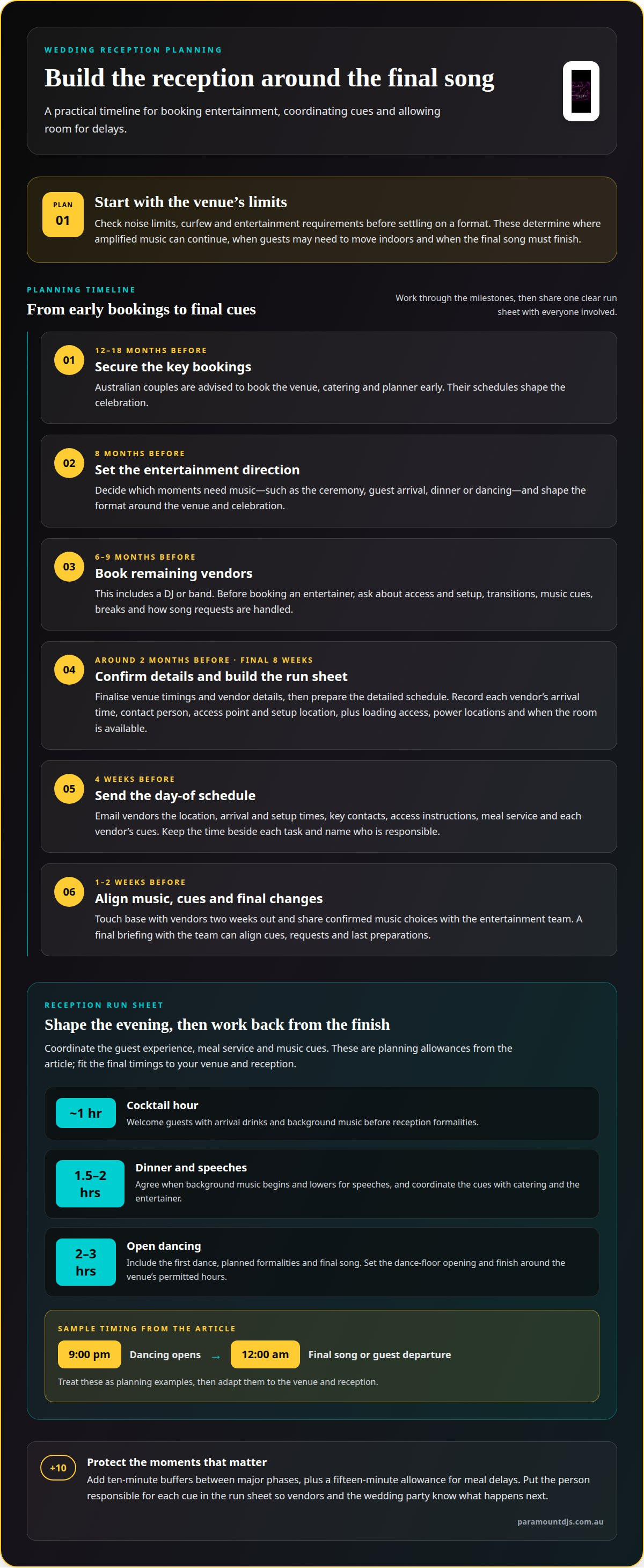
Build the dance floor into your reception plan alongside guest arrival, drinks, dinner, speeches and vendor timings. A wedding entertainment planning timeline might allow about an hour for cocktail hour, one and a half to two hours for dinner and speeches, and two to three hours for open dancing. Add ten-minute buffers between major phases so a late course or longer speech doesn’t throw the evening off course.
It’s easy to focus on the music and overlook the moments around it. But smooth transitions help guests settle in, give vendors clear cues and let the atmosphere build naturally from arrival drinks to the final song.
This guide shows you how to structure entertainment, coordinate the people and timings involved, leave room for delays and plan a welcoming drinks period. You’ll also find a practical way to shape the schedule around your reception, rather than forcing the celebration to fit a rigid run sheet.
Key Takeaways
- Settle key vendor details and venue logistics well before the wedding, then share a clear run sheet so everyone knows their arrival time and cue.
- Send the day-of schedule to vendors four weeks before the wedding and touch base again two weeks out to align the final details.
- Give guests a relaxed start by scheduling arrival drinks before reception formalities, with a clear transition into the main celebration.
- Shape the music around the reception’s key moments, from guest arrival and speeches to the first dance and open dancing.
What are the main elements of a wedding entertainment timeline?
Build the schedule around venue conditions, vendor arrivals and the reception’s key moments. Start with the guest experience, then work backwards from the planned final song.
-
Check venue limits and requirements
Ask the venue about noise limits, curfew and entertainment requirements before settling on a format. These conditions affect whether amplified music can continue outdoors, when guests must move inside and when the final song needs to finish.
Compare a DJ, live band and other entertainment by the atmosphere, music range, space and changeovers each requires. Licences, permits and insurance requirements vary with the venue, event and entertainment setup. Confirm the specific documents and restrictions with the venue and relevant entertainers.
-
Finalise vendor details and arrival times
Note each vendor’s arrival time, contact person, access point and setup location in the run sheet. Include practical venue logistics, such as loading access, power locations and when the room becomes available. Share the timings that affect entrances, speeches or formalities with the wedding party and key family members.
Finalise venue timings and vendor details around two months before the wedding, then share the detailed schedule during the final eight weeks. Send vendors the day-of schedule four weeks before the wedding and touch base again two weeks out. A final briefing with the entertainment team one to two weeks before the wedding can align cues, music requests and last preparations. Include accommodation or transport details if they affect guests’ arrival or departure plans.
-
Schedule dancing and the final song
Set the dance-floor opening and finish around the venue’s permitted hours, not just your preferred playlist. A sample reception schedule opens dancing at 9:00 PM and places the final song or guest departure at 12:00 AM. Treat these as planning examples, then fit your timings to your venue and reception.
Allow about an hour for cocktail hour, then coordinate dinner and speeches before open dancing. Add the first dance, planned formalities and final song to the run sheet. Share confirmed music choices with the entertainment team two weeks before the wedding, leaving time to align the cues.
Coordinating entertainment with other vendors
Set booking priorities early, then connect ceremony, catering and music cues in one shared plan. Before booking, ask entertainers about setup, transitions, breaks and the details they need.
-
Book venues and vendors
Secure the venue, catering and planner early because their schedules shape the celebration. Australian couples are advised to book these key vendors 12-18 months before the wedding. Plan entertainment eight months ahead, and book remaining vendors, including a DJ or band, six to nine months before the wedding.
Before booking an entertainer, ask about access and setup needs, ceremony-to-reception transitions, music cues and how song requests are handled. Use your wedding entertainment planning timeline to coordinate these decisions with venue and catering milestones, rather than leaving music planning until the run sheet is nearly final.
-
Coordinate vendors and catering
Match entertainment cues to catering service so dinner and music work together. Agree when background music begins, when it lowers for speeches and when dancing starts after the meal. Share these transitions with the caterer and entertainer so neither has to guess whether a course or formal moment is ready.
Put the ceremony finish, reception entry, meal service and speeches in sequence. Name the person responsible for each cue, such as the MC introducing the wedding party or the venue coordinator signalling a course. Clear roles help everyone move the celebration smoothly between phases.
-
Email vendors the wedding-day schedule
Email vendors the wedding-day schedule four weeks before the event. Include the location, arrival and setup times, key contacts, access instructions, meal service and each vendor’s cues. Keep the layout easy to scan, with the time beside each task and the person responsible.
Touch base with vendors two weeks before the wedding to resolve changes and ensure everyone has the latest version. Keep the wedding entertainment planning timeline consistent across the run sheet and vendor emails. Send updates promptly if timings change, so catering and entertainment aren’t working from different plans.
Building buffer time into the schedule
Allow space for delays without losing the reception moments that matter. A wedding entertainment planning timeline should account for transitions, meal service and practical contingencies.
-
Set decisions by planning stage
Settle the entertainment format and broad priorities early. Australian couples are advised to plan entertainment eight months before the wedding. Decide which moments need music, such as the ceremony, guest arrival, dinner or dancing, then shape your choices around the venue and celebration.
During the final eight weeks, prepare the detailed wedding-day schedule and share it with vendors, the wedding party and key family members. Give the reception an emotional arc, from welcoming background music to formal moments and a more energetic dance floor. Build ten-minute buffers between major phases, plus a fifteen-minute allowance for meal delays. These gaps help protect planned cues if catering runs behind.
-
Prepare performer and equipment backups
Agree on a contingency plan for performer illness, bad weather or equipment failure. Decide who will contact the venue, coordinator and entertainment team, and who will relay changes to the wedding party. For an outdoor reception, identify an indoor alternative and the cue for moving the schedule inside.
Discuss how the music plan could adapt if a performer can’t attend. For equipment issues, identify a suitable fallback, such as a prepared playlist, and assign someone to start it. Include these instructions in the run sheet so the coordinator can act without interrupting the couple. A wedding entertainment planning timeline is more useful when it includes clear backup responsibilities, not just ideal timings.
- Protect key moments from overruns by setting firm speech limits in writing and telling speakers in advance. A four-speech programme without time limits can run forty minutes over schedule. Place speeches where catering can accommodate them, and leave flexibility before the reception’s first formal cue if travel or destination arrangements affect arrivals.
Guest arrival and pre-reception drinks
Give guests a clear first moment, then use the reception timeline to guide the shift from conversation to celebration. A sample Sydney schedule starts guest arrival and pre-reception drinks at 5:00 PM, with reception doors opening at 6:00 PM.
- Set the arrival window around the ceremony finish, travel time and venue access. Use the invitation to tell guests where to go and when drinks begin, especially if ceremony and reception locations differ. At 5:00 PM, welcome guests with easy-to-follow directions and a relaxed atmosphere. This gives the wedding party time for photos while guests have somewhere comfortable to gather.
Choose music for conversation during this first part of the event. Keep the volume appropriate for greetings and announcements, and choose a clear cue for moving guests inside. A coordinator or nominated family member can guide late arrivals without interrupting the couple’s photos or reception entrance.
- Map the reception phases against the guest list and catering plan. A typical schedule allows one and a half to two hours for dinner and speeches, followed by two to three hours of open dancing. Put meal service, formalities and music transitions in sequence so guests aren’t left waiting while vendors work out what happens next.
Use a checklist to note who gives each cue. For example, the coordinator can signal the wedding party’s entrance, while the MC introduces speeches. If photos run late or guests arrive gradually, schedule buffers help preserve dinner and dancing instead of compressing every later moment.
- Make the welcome feel considered for guests arriving in formal clothes or dresses. Give clear directions to drinks, seating and facilities, and make sure the entrance route suits the venue layout. If Photo Booth Hire is part of the celebration, position it where guests can find it without blocking the arrival area or disrupting the flow into the reception.
Settle the order of arrival, drinks, photos and entry before sharing the final timeline. For entertainment that complements the welcome and later reception phases, plan your wedding entertainment around the guest experience.
Paramount DJs: Wedding DJs
Paramount DJs provides Wedding DJs to shape the reception’s atmosphere around your music choices and key moments. Bring your run sheet, preferred genres and important cues into the planning conversation so the entertainment fits the flow you’ve mapped out.
For a distinctive live element, DJ & Sax duos pair saxophone performance with DJ music. Live bands and photo booth hire offer other ways to bring guests together, depending on the experience you want for your celebration. Choose options that support your priorities, rather than adding activities that don’t suit your event.
If you’re ready to bring your reception plan and entertainment together, contact Paramount DJs to discuss your wedding.
Shape the atmosphere you want guests to remember
Your reception doesn’t need every entertainment idea. Choose the feeling you want guests to take away, then let that priority guide your music and activity choices. A lively dance floor, a distinctive live moment or an easy way for guests to join in can each shape the celebration differently.
Use your wedding entertainment planning timeline to turn that preference into a conversation about how entertainment can fit your day. Paramount DJs offers Wedding DJs, photo booth hire and DJ & Sax duos, giving you different ways to create an engaging experience. Share the atmosphere you’re hoping for and the moments that matter most to you.
Contact Paramount DJs about your wedding to discuss an entertainment plan that feels right for your celebration. With a clear direction, you can look forward to a reception that feels personal, welcoming and unmistakably yours.
Frequently Asked Questions
How far in advance should you book wedding DJs, bands and other performers?
Aim to book a DJ or band six to nine months before the wedding. If entertainment is a major part of your plans, make it an early booking priority once your venue and date are settled. Popular Australian venues can book out 12-18 months ahead, particularly during peak season, so securing the venue first helps you coordinate entertainment with the confirmed location.
What should a wedding entertainment run sheet include?
Include the order of key moments, the person responsible for each cue and how changes will be communicated. For example, note who signals the entrance music, starts a formal dance or tells the entertainer that speeches are finished. Add song choices for important moments and identify one person who can make on-the-day decisions, so the couple isn’t managing every cue during the celebration.


